

Artificial grass can look tired even when it is clean. Fibers flatten beneath patio chairs, along busy paths, and where pets pause. A well-chosen Turf Brush can lift that pile, spread loose infill more evenly, and make routine care easier. The wrong brush can feel too stiff, too small, or awkward to push. Small differences matter.
Dr. Eric Lyons, a turfgrass scientist at the University of Guelph, studies turf management and surface performance. A practical paraphrase of his research-minded approach is: “Match maintenance to the surface, then judge the result.” That is a useful test for any brush. Consider bristle firmness, head width, handle reach, and whether the tool suits your lawn’s pile and infill. A brush that works on a compact balcony may not be comfortable across a broad backyard. No single model fits every surface.
This 2026 guide compares seven Turf Brush options by design, handling, and everyday usefulness. Expect details you can check: how the bristles move turf fibers, whether the head reaches corners, and how much effort sweeping requires. Product specifications and lawn conditions can vary, so treat rankings as a starting point, not a promise. A careful brush choice helps. Technique matters, too.
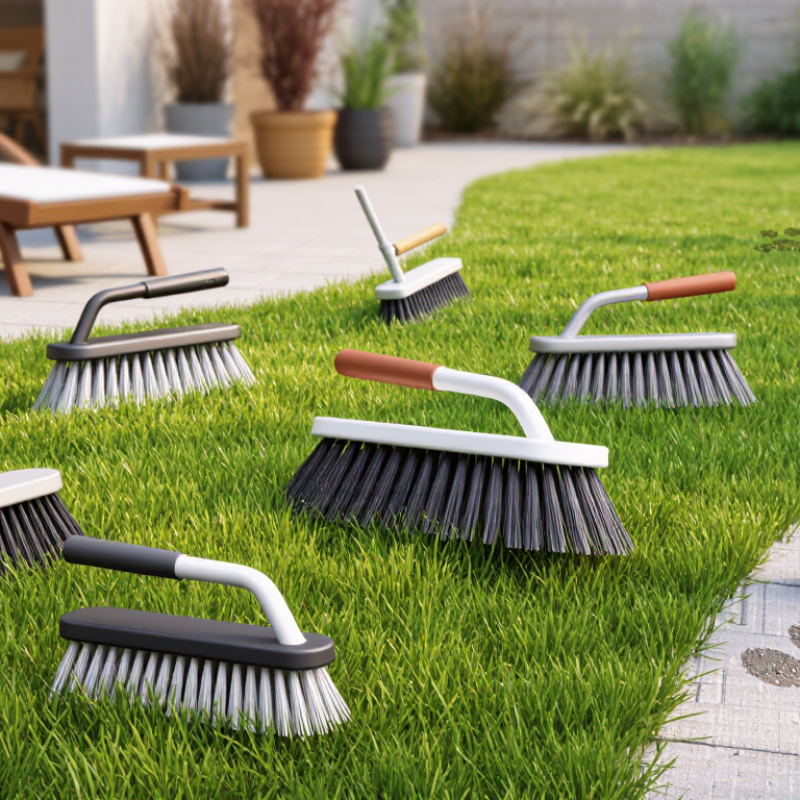
A turf brush restores artificial grass by lifting flattened blades and loosening debris caught near the surface. Foot traffic often presses the pile in one direction, leaving pale, shiny-looking paths across the lawn. Brush against the grain with steady, moderate pressure. Short strokes work. A stiff brush can help with compacted areas, but excessive force may stress the fibers or backing. Check the turf manufacturer’s care guidance before choosing bristle stiffness.
Clear leaves and loose dirt first, so brushing does not grind grit through the pile. Work in small sections, using overlapping strokes to lift fibers evenly. Around patio furniture, edges, and play areas, a hand brush can offer better control than a wide head. The change is usually easiest to see in raked-looking tracks: the blades stand more upright, and the surface appears more uniform. Avoid brushing wet turf if it feels slippery or debris clumps together.
Brush as needed, especially after heavy use or seasonal leaf fall, rather than following a rigid schedule. A quick visual check can reveal whether the pile is simply flattened or genuinely damaged. Brushing may improve the appearance of matted fibers, but it cannot fix torn seams or worn backing. It is tempting to keep brushing until every blade looks perfect; that can do more harm than good. Some shading and variation are normal.
A turf brush should match the pile height, infill, and area you maintain. Bristle stiffness matters: soft nylon suits delicate fibers, while firmer bristles can lift flattened blades but may abrade weak turf. Check the brush manufacturer’s compatibility guidance, and inspect a small, hidden patch before regular use. A costly brush can still be the wrong brush.
Grand View Research valued the global artificial turf market at about US$4.28 billion in 2023 and forecast 6.3% annual growth through 2030. That growth makes practical selection more important, but market size does not prove one brush design works best.
Compare working width, adjustable height, handle reach, weight, and whether the unit collects leaves or only redistributes them. For a small lawn, a manual brush may offer better control; larger areas may benefit from powered models, provided their rotation and pressure suit the surface. Check battery runtime or cord reach, too.
Annoying details matter. Bristles should reach the pile without scraping the backing, and wheels should roll without leaving tracks. A simple test is still worth doing. Brush a short section, then check for displaced infill, visible scuffing, or uneven fibers.
Seven turf brushes for artificial grass in 2026 suit different yards and maintenance needs. A stiff-bristle push broom can lift flattened blades across a wide lawn. Softer bristles may be gentler on delicate turf. Dual-head brushes offer two levels of firmness, while narrow brushes reach edges and corners. A broad-head model covers open areas faster. Powered rotary brushes save effort on larger surfaces, but need careful handling. Battery-powered versions avoid trailing cords. Choose bristles made for synthetic turf, and check the lawn’s care instructions before brushing.
Tips: Brush against the grass pile in light, even strokes. Clear leaves and grit first; trapped debris can scratch the backing or get pushed deeper. Test an inconspicuous patch. Go gently. Too much pressure may disturb infill or stress the fibers, and a powered brush is not automatically better.
For a practical choice, consider lawn size, storage space, and how often the grass gets walked on. Small details matter. A compact hand brush can work well for a balcony or narrow strip, while a wide manual brush is easier for regular upkeep across a garden. Check that the handle feels comfortable and the head is easy to clean. One easy mistake is buying the stiffest brush available; firmness should match the turf, not just the mess. Even careful brushing will not make worn fibers look new, so expectations should stay realistic.
A function-based guide to common brush styles for routine artificial-grass care.
How to read this: Suitability scores are editorial estimates based on each tool’s typical function, not measured test results or a ranking of specific products. Choose a brush appropriate for the turf manufacturer’s care instructions and pile type.
Match a turf brush to the lawn’s pile height, infill, and everyday debris. Short, dense turf often responds well to softer bristles and steady, light passes. Taller blades may need a firmer brush to lift flattened fibers, especially along walkways and seating areas. Choose a head narrow enough for corners and edges; a very wide brush can feel awkward around garden beds. Check the turf care instructions before using a powered brush. Aggressive brushing can disturb infill or roughen the surface. Small lawns need control. Less is safer.
Tips: Brush dry turf when possible, and test a small, hidden patch first. Move with the blade direction, then gently against it if fibers remain flat. Stop if infill shifts or the surface looks abraded.
Your maintenance routine matters, too. If leaves and twigs collect often, a brush with durable bristles can help clear debris between deeper cleanings. For pet areas, choose a tool that reaches the base of the pile without scraping the backing. Sweep loose waste away before brushing, so grit does not drag across the fibers. A brush that is comfortable to hold is more likely to get used regularly. I have found that matching brush stiffness can take a little trial and error; the softest option is not always enough. Check the lawn after each session, and adjust pressure before changing tools.
Brushing helps artificial grass stand upright and keeps flattened areas looking more natural. Work against the direction of the pile with a turf brush, using steady strokes rather than pressing hard. A stiff wire brush can damage the fibers, so choose bristles designed for synthetic turf. Keep it gentle.
Brush when the surface is dry and clear of loose leaves or grit. Start at one edge and move in overlapping strips, then change direction across busy areas such as garden paths or seating spots. This cross-brushing lifts fibers that foot traffic has pushed sideways. Short strokes give you better control near seams, edging, and drains. Avoid dragging heavy debris across the surface.
There is no perfect schedule for every lawn. Check the grass every week or two, and brush sooner if you notice flattened tracks. If the turf contains infill, use moderate pressure and watch for material shifting into piles. A quick inspection can catch loose seams or worn patches before they worsen. I sometimes expect one pass to restore a matted area, but older fibers may remain bent. Adjust your technique, and avoid brushing harder just to force them upright.
This brand-free guide compares common brush styles by their typical use. Check your turf manufacturer’s care instructions before using powered equipment or a brush with stiff bristles.
| Brush Type | Typical Head or Working Width | Bristle or Contact Surface | Best Suited For | Proper Brushing Technique | Considerations |
|---|---|---|---|---|---|
| 1. Stiff Nylon Push Broom | Commonly about 18–24 in | Firm synthetic bristles | Routine grooming of small to medium areas and lifting flattened pile | Brush against the direction in which the turf fibers lie, using steady, overlapping passes. Use moderate pressure rather than forcing the bristles down. | A practical manual option. Very stiff bristles or excessive pressure can disturb infill or stress the turf backing. |
| 2. Wide Push Broom | Often about 24–36 in | Medium-firm synthetic bristles | Covering larger open sections efficiently | Work in manageable strips and keep each pass consistent. Change direction occasionally to help the pile stand more evenly. | The wider head covers more ground but may be harder to control in corners and narrow spaces. |
| 3. Adjustable-Angle Turf Rake | Varies by model; commonly around 16–24 in | Flexible plastic or synthetic tines designed for turf | Removing light surface debris and grooming pile without a heavy brush head | Use light strokes and follow the tool’s instructions. Lift leaves and loose debris rather than digging the tines into the backing. | Use a rake designed for artificial turf. Metal garden rakes can cut fibers or damage the backing. |
| 4. Dual-Sided Turf Rake and Brush | Commonly about 16–24 in | One side with turf-safe tines and one side with synthetic bristles | Homes needing one tool for loose debris and light grooming | Use the rake side to gather surface debris, then turn to the brush side for gentle pile lifting. Avoid scraping either side across the turf. | Versatile for light maintenance, but may be slower than a dedicated wide brush on a large lawn. |
| 5. Compact Hand Brush | Typically about 6–12 in | Short, firm synthetic bristles | Steps, seams, edges, small patches, and spot cleaning | Brush short sections with controlled strokes, moving against the pile direction where practical. | Easy to control in tight areas; inefficient for brushing an entire lawn. |
| 6. Powered Rotary Turf Brush | Working width varies; often around 12–20 in | Rotating synthetic-bristle roller or brush | Frequent grooming of larger areas or pile that is difficult to lift by hand | Use the lowest suitable setting, keep the machine moving, and test it on an inconspicuous area first. Follow the equipment and turf manufacturers’ instructions. | Requires power and careful operation. An aggressive setting or prolonged use in one spot can disturb infill or damage fibers. |
| 7. Power-Broom Attachment | Depends on the compatible tool; commonly around 10–18 in | Rotating synthetic-bristle brush head | Localized grooming where a compatible powered tool is already available | Use a light touch and short, even passes. Keep the head moving and stop if fibers or infill are being displaced. | Compatibility and speed settings vary. Confirm that the attachment is suitable for artificial turf before use. |
Care tips: Remove leaves and other loose debris regularly, then brush the turf against the natural lay of the fibers with gentle, even strokes. Avoid metal rakes, open flames, and excessive pressure. For powered tools, follow the turf manufacturer’s guidance and test a small, discreet area first.