2026 Best Milking Equipment for Global Buyers to Consider?
In the dairy industry, selecting the right milking equipment is crucial for efficiency and productivity. According to the latest market research, the global milking equipment market is projected to reach over $3 billion by 2026, highlighting its importance. As dairy farming becomes more competitive, farmers worldwide must invest in innovative technologies that enhance milk production and animal welfare.
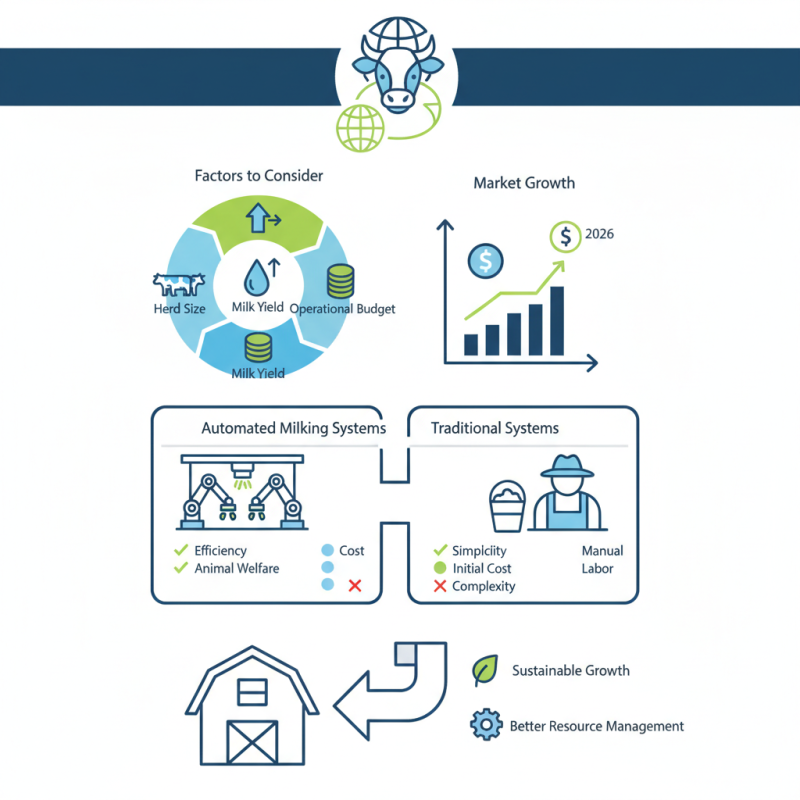
Various factors influence the choice of milking equipment, including herd size, milk yield, and operational budget. Advanced solutions like automated milking systems are gaining traction for their efficiency. However, these systems can be complex and require careful consideration of their integration into existing operations. Farmers should also account for the costs associated with installation and maintenance.
Investing in the right milking equipment can significantly impact overall farm productivity. Still, it’s crucial to weigh the benefits against potential drawbacks. As the industry continues to evolve, global buyers must stay informed about the latest technologies and trends. Making well-informed decisions can lead to sustainable growth and better resource management in dairy operations.
2026 Key Features to Look for in Milking Equipment
In 2026, choosing the right milking equipment requires a keen eye for specific features. Milk quality is critical. Reports indicate that over 80% of dairy farmers prioritize sanitation and cooling systems in their equipment. Effective sanitation helps reduce bacterial counts significantly, ensuring safer milk for consumers. Cooling systems maintain the milk’s quality post-collection, which is vital in avoiding spoilage.
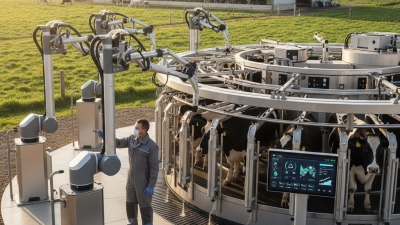
Additionally, automation continues to be a game changer. Data shows that automated milking systems can improve efficiency by up to 30%. These systems not only enhance productivity but also reduce labor costs. Farmers are increasingly looking for equipment that integrates with smart technology, offering real-time monitoring capabilities. This technology can provide insights into cow health and milk output, leading to better management decisions.
However, not all equipment delivers on promised efficiencies. Some systems may require frequent repairs or adjustments. Evaluating durability and support services is essential for long-term investment. Buyers must consider both initial costs and ongoing maintenance when selecting milking equipment. This reflection is important for ensuring reliable operation in the demanding environment of dairy farming.
Top Brands of Milking Equipment for Global Buyers in 2026
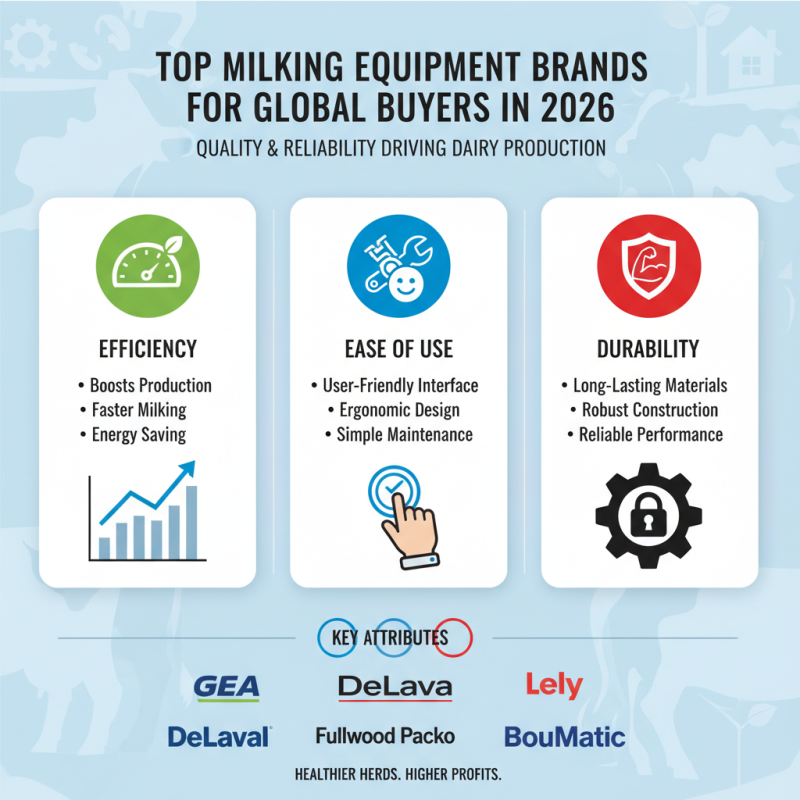
When considering milking equipment in 2026, buyers must explore various top brands that promise quality and reliability. Key attributes include efficiency, ease of use, and durability. Efficient milking can significantly boost dairy production and overall farm productivity. Reliable equipment often results in healthier herds, which is important for both ethical and economic reasons.
Some brands focus on innovative technology, enhancing the milking process with automation. Others prioritize traditional methods, emphasizing craftsmanship and proven techniques. Selecting milking equipment requires careful thought. It’s vital to assess how each brand aligns with specific farm needs and conditions. Not all solutions fit every farmer. Thus, global buyers need to evaluate compatibility and support services.
Buyers should also consider feedback from peers and industry experts, gathering insights on performance and reliability. Features such as easy cleaning and maintenance are crucial for long-term satisfaction. Drones and data analytics now play a role too—tracking herd health and production efficiently can influence equipment choices. There’s a balance to achieve: traditional values and modern advancements. Reflection on expectations is essential to ensure the right fit for future operations.
Innovations in Milking Technology: What to Expect by 2026
As we look toward 2026, milking technology shows tremendous promise. Innovations aim to improve efficiency and animal welfare. Intelligent sensors will monitor cow health and milk quality more closely. Automated systems will enhance precision in milking, requiring less manual oversight. This is crucial for farmers seeking to balance productivity with animal care.
Expect advancements in software too. Data analytics will become essential. Farmers will use real-time insights to optimize operations. Young farmers should embrace these tools as they drive better decisions. However, reliance on technology brings concerns about data privacy and system failures. There is a need for careful implementation to avoid potential pitfalls.
Sustainability will be a key focus. Eco-friendly practices will shape equipment choices. There will be a push towards systems that minimize waste and energy use. Farmers may need to rethink traditional methods. This change comes with challenges, often requiring investment and training. It’s an evolving landscape that requires adaptability and foresight to meet future demands.
Cost Considerations: Budgeting for Milking Equipment in 2026
When budgeting for milking equipment in 2026, cost is a primary concern. Prices can vary widely based on technology, capacity, and features. New automated systems promise efficiency but may come at a higher upfront cost. Traditional systems might seem economical, yet they often require more manual labor. A thorough analysis of your dairy operations is essential. Evaluate how much you currently spend on labor, maintenance, and downtime.
Consider the long-term savings of investing in higher-quality equipment. Lower maintenance costs can offset initial investments. Think about energy efficiency as well. Some equipment consumes more power, which adds to operational costs. Don’t forget about financing options available for dairy farmers. It can help manage cash flow effectively but may lead to accumulating debt.
These reflections on budget require careful thought. Ask yourself whether the cheap alternatives offer the same reliability and performance. Sometimes, investing more upfront can yield better results in the long run. Take the time to assess your needs and potential future expansion. Your choices in milking equipment will impact productivity and profitability for years ahead.
2026 Milking Equipment Cost Considerations
Global Trends in Dairy Farming and Their Impact on Milking Equipment Selection
The global dairy farming industry is undergoing significant changes. Farmers are increasingly focused on sustainability and efficiency. These trends are shaping how milking equipment is selected. For instance, more producers are adopting automated systems to reduce labor needs. These systems allow for real-time monitoring, improving herd health.
However, adopting new technologies can be challenging. Some farmers may hesitate to invest in expensive equipment. They worry about the return on investment. Training staff to operate advanced machines can be another concern. Therefore, it's essential to evaluate options carefully.
Additionally, consumer preferences are shifting. Demand for organic and ethically-produced milk is on the rise. This influences equipment choices, pushing farmers toward more environmentally friendly solutions. Milking technologies must meet these evolving standards while ensuring high-quality output. Attention to detail is vital. Farmers must balance innovation with tradition, which can be a complex journey.
2026 Best Milking Equipment for Global Buyers to Consider
| Equipment Type |
Key Features |
Impact on Efficiency |
Average Cost (USD) |
Market Trends |
| Automatic Milking Systems |
Robust sensors, 24/7 operation, and data analytics |
Increases milk yield and reduces labor costs |
$150,000 - $250,000 |
Growing adoption in large dairies |
| Portable Milking Units |
Lightweight, easy to transport, and manual options |
Ideal for small farms and flexibility |
$1,000 - $5,000 |
Increasing demand among smallholders |
| Milking Robots |
Automated robot arm, real-time monitoring |
Maximizes cow comfort and milk production |
$200,000 - $300,000 |
Technological advancements driving innovation |
| Milk Storage Tanks |
Insulated, hygienic, temperature control |
Preserves milk quality and extends shelf life |
$5,000 - $15,000 |
Focus on sanitary transport and storage solutions |
| Cluster Milking Systems |
Multiple teat cups, rapid milking process |
Enhances productivity for medium-sized farms |
$20,000 - $60,000 |
Adapting to health and welfare regulations |