

Reliable water treatment is a practical need, not just a purchasing trend. The WHO/UNICEF Joint Monitoring Programme reported that 2.2 billion people lacked safely managed drinking water services in 2022. This global figure does not measure China’s equipment market, but it underscores why treatment performance and dependable maintenance matter.
For buyers comparing China Best Water Purification Unit Manufacturers, the useful question is not simply who claims to be the best. It is whether a supplier can match its equipment to the source water, required output, and operating conditions. A Water Purification Unit may combine filtration, membrane treatment, disinfection, or other processes; the right configuration depends on the application. Small details count: flow rate at peak demand, replacement-filter availability, and clear instructions for monitoring water quality.
A polished brochure is not proof. This guide will outline practical ways to assess manufacturers, including technical documentation, quality controls, customization, service support, and evidence behind performance claims. Buyers should request test results and confirm that stated standards apply to the specific model and intended use. Compare like with like. No single supplier suits every project, and published specifications may not reflect performance at every site. That gap deserves attention. By pairing recognized public-health guidance with verifiable product information, readers can make a more informed shortlist without treating marketing claims as independent evidence.
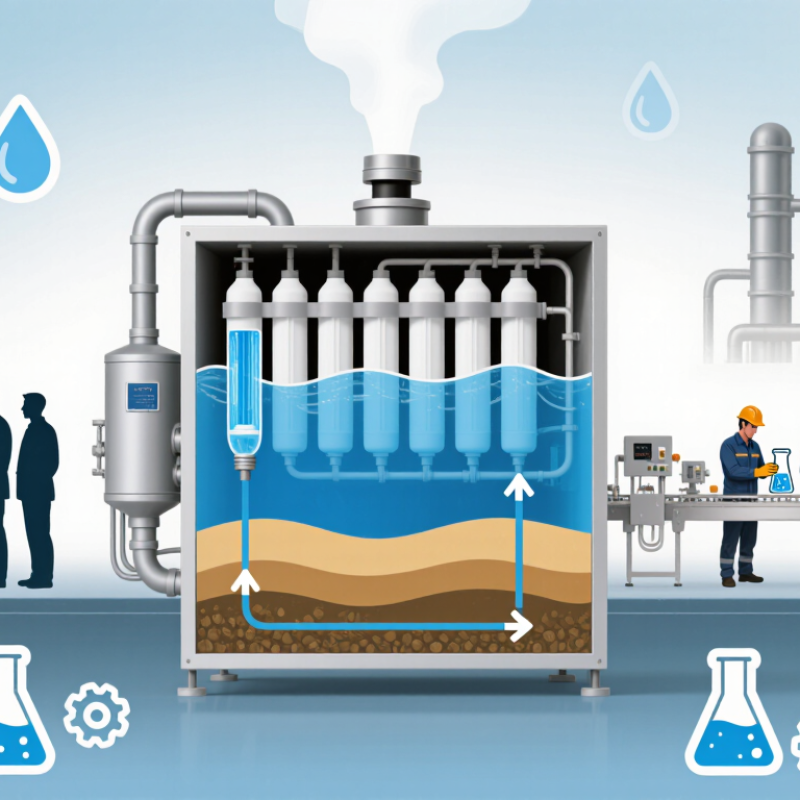
Water purification units are not one-size-fits-all machines. Their job is to reduce specific contaminants while maintaining practical flow and manageable upkeep. A typical household system may combine sediment filtration, activated carbon, and a membrane. Sediment cartridges catch grit and rust, protecting later stages. Carbon can reduce chlorine taste and odor, but performance depends on contact time and timely replacement. Small details matter. A cartridge that looks clean may still be exhausted.
Not interchangeable.
Testing the source water is more useful than choosing by a dramatic specification sheet. In practice, water quality, daily demand, installation space, and access to replacement parts shape a reliable choice. Maintenance is easy to underestimate.
China’s water purification manufacturing sector includes equipment assemblers, component makers, and firms that design complete treatment systems. Their products may combine sediment filters, activated carbon, reverse osmosis membranes, ultraviolet treatment, and monitoring controls. Capabilities vary widely. Some factories focus on household units, while others build systems for commercial kitchens, clinics, or industrial processes. The label “manufacturer” alone does not reveal how much design or testing happens in-house.
A reliable supplier should explain its process clearly, from incoming-material checks to finished-unit testing. Ask for capacity data, replacement-filter specifications, and test records for the exact configuration being quoted. A system suited to municipal water may perform differently with well water or changing seasonal conditions. Real operating details matter: inlet pressure, daily demand, water temperature, and maintenance access can all affect performance. A polished brochure is not enough.
Tips: Request a component list and sample test report. Confirm who handles warranty service and spare parts. Check whether stated performance applies to your source water and usage. Small detail, big difference. Suppliers may present information unevenly, so compare like for like and ask follow-up questions when figures lack test conditions.
China’s water-purification manufacturers serve different buyers, so “best” depends on the application. Some specialize in household systems, including under-sink units, countertop dispensers, and replacement filter assemblies. These manufacturers often supply retailers, housing projects, and overseas distributors seeking adaptable designs. Others build commercial equipment for cafés, hotels, clinics, and small factories, where steady water flow matters more than compact size. Industrial producers typically engineer higher-capacity systems for boilers, production lines, or process-water treatment. Details matter.
The market served often shapes a manufacturer’s strengths. A household supplier may offer many filter configurations but have limited experience with demanding factory installations. An industrial specialist may provide detailed process support, yet its equipment could be oversized for a small shop. Buyers can compare rated flow, inlet-water limits, filter life, and access for routine servicing. Ask for test reports tied to the specific model, not only general product claims. A low price can hide costly cartridge changes or awkward maintenance. I would also check how clearly the supplier explains performance limits; some product pages leave important questions unanswered.
When evaluating China’s water purification unit manufacturers, begin with the water problem the equipment must solve. Ask for a design based on feed-water analysis, target flow rate, and intended use. A unit for high hardness may need different treatment stages from one handling sediment or excess chlorine. Details matter.
Request process diagrams, component specifications, and test results for the proposed configuration. Check whether certificates and laboratory reports apply to the exact unit, not merely to individual components. Ask how the manufacturer controls assembly, inspects finished systems, and records test results. A factory visit or live production review can clarify what a brochure cannot. Also examine service terms, spare-part availability, and response times. Get these in writing.
A sample test using representative water can reveal issues before a large order. Compare measured output with stated capacity, pressure, and water-quality targets. Ask how filters or membranes are replaced, and what maintenance costs to expect. Even a careful review leaves uncertainty; brochures cannot show performance after months of scaling or changing feed water. I would treat vague answers as a reason to ask more, not as proof of poor quality. Small details, such as clear operating instructions and accessible fittings, often matter once the unit reaches the site.
Suggested evaluation weights for comparing manufacturers. These are framework weights, not measured company scores or market statistics.
Prioritize verified water-treatment performance and compliance, then assess quality systems, customization, after-sales support, and total cost. Request test reports and documentation to validate each supplier’s claims.
China Best Water Purification Unit Manufacturers?
Choosing a Chinese water purification unit manufacturer takes more than comparing quoted prices. Start with the process details: source-water analysis, required flow rate, target contaminants, and daily operating hours. Ask for a process diagram showing pretreatment, filtration stages, disinfection, and monitoring points. The supplier should explain each stage, not just send a standard configuration. Verify factory capability through a live video walk-through or an independent audit. Compare the workshop shown with the production address on its documents. This step can feel tedious. It may reveal whether the team builds systems or coordinates outside production.
Tips: Request recent test reports for the exact unit configuration, not a similar model. Check report dates, sample points, test methods, and laboratory credentials. Ask for material specifications, pump and filter details, spare-parts availability, warranty exclusions, and commissioning scope. Have the supplier show a control panel, a weld, and a finished skid. Small details matter. Confirm that manuals and operator training are included. Keep answers in writing. Verbal promises fade.
Before paying a deposit, agree on acceptance criteria: output capacity, operating pressure, recovery rate, and treated-water parameters under stated feed conditions. Ask how performance may change when inlet turbidity or temperature shifts. Request references from installations with similar water quality, then speak with an operator if possible. Be cautious when every answer is “yes” but no supporting record follows. Raw water varies, and one test cannot guarantee identical results at every site. A careful manufacturer will state assumptions, limits, and what must be checked after installation.
| Verification Area | What to Check | Evidence to Request | Practical Acceptance Check |
|---|---|---|---|
| Legal identity and business scope | Confirm the supplier’s registered legal entity and whether its business scope is relevant to water-treatment equipment or manufacturing. | Current Chinese business license, registered address, and Unified Social Credit Code. | Check the entity through China’s National Enterprise Credit Information Publicity System. Confirm that the contracting, invoicing, and exporting entities are clearly identified. |
| Manufacturer or trading company | Establish whether the supplier makes the complete unit, assembles it, or sources it from other factories. | Production-site address, process flow, equipment list, staff roles, and a live or independent factory-audit option. | Match the production site and processes shown during the audit with the products and manufacturing claims in the quotation. |
| Product certification | Check that any claimed certification covers the exact model, configuration, and intended market—not merely a similar product or component. | Certificate number, issuing body, scope, model list, validity dates, and applicable test reports. | Verify certificates in the issuing organization’s own directory where available. Confirm that the listed model and certification scope match the purchase specification. |
| Performance claims | Review stated capacity, contaminant-reduction claims, recovery rate, and operating conditions. Results depend on feed-water quality, pressure, temperature, and test method. | Test reports identifying the model, test conditions, methods, results, and laboratory. | Compare the reports with the exact claims in the quotation and product literature. Treat unqualified claims such as “removes all contaminants” as unsupported. |
| Relevant water-treatment standards | For products sold in North America, determine whether the applicable NSF/ANSI standard fits the product and claim: Standard 42 covers aesthetic effects, Standard 53 health effects, Standard 58 reverse-osmosis systems, and Standard 401 certain emerging compounds. | Certification or test documentation specifying the standard, certified claims, and exact system configuration. | Do not assume one standard certifies every performance claim. Check the certifier’s listing and the scope of the specific claim. |
| Materials in contact with drinking water | Check wetted materials such as housings, tubing, seals, tanks, and fittings for suitability for the intended water and sales market. | Material specifications, supplier declarations, applicable migration or extraction tests, and component certificates where relevant. | Confirm that the tested materials correspond to the components used in the quoted production version. Market requirements vary, so identify the destination country before approval. |
| Quality management and production controls | Assess incoming inspection, assembly controls, calibration, traceability, nonconformance handling, and final testing. | Quality-management certificate if claimed, inspection procedures, sample records, calibration records, and a sample final-inspection report. | Verify certificate scope and validity with the issuing body. A management-system certificate does not by itself certify product performance. |
| Production capacity and consistency | Check whether the supplier can meet the required volume, lead time, and repeat-order specifications. | Production schedule, capacity assumptions, component sourcing plan, and records from comparable production runs. | Confirm capacity against the actual order quantity and delivery window. Agree in writing on approved components and change-control procedures. |
| Pre-shipment inspection and testing | Define checks for workmanship, leakage, electrical safety where applicable, flow, pressure, and supplied accessories. | Inspection checklist, sampling plan, test limits, and a completed report for the production batch. | Agree on inspection criteria and remedies before production. Use an independent inspection service when the order risk justifies it. |
| Warranty, spare parts, and service | Review warranty duration, exclusions, replacement-part availability, response times, and responsibility for shipping defective parts. | Written warranty terms, spare-parts list, service process, and expected availability period. | Make warranty coverage and after-sales responsibilities part of the contract rather than relying on verbal assurances. |
| Packaging, shipping, and export documents | Confirm packaging protects the unit in transit and that documents match the destination market and shipping terms. | Packaging specifications, packing list, commercial invoice details, and any destination-specific conformity documents required for the product. | Agree on Incoterms, delivery responsibilities, labeling, and document requirements before shipment. Requirements vary by destination and product type. |
| Sample and production-unit consistency | Ensure the approved sample is representative of the mass-produced unit, including filter media, membranes, pumps, controls, and fittings. | Signed sample specification, bill of materials, drawings, and an approved-change procedure. | Attach the final technical specification to the purchase order and require written approval for substitutions or design changes. |
Note: Certification, testing, and import requirements depend on the product configuration and destination market. Verify current requirements with the relevant regulator, certification body, or qualified compliance professional before placing an order.