

Choosing reliable Canned Green Peas suppliers requires more than comparing prices on a product page. Global buyers need evidence of consistent processing, accurate documentation, and dependable export performance. This introduction frames a practical review of China’s top suppliers for international purchasing teams.
The evaluation considers pea variety, color, firmness, can sizes, packing formats, and production capacity. It also examines food safety systems, batch traceability, laboratory testing, and export certifications. A serious supplier should explain where peas are sourced, how they are blanched, and how each can is sealed. Buyers may also need private labeling, mixed containers, flexible minimum order quantities, or delivery through major Chinese ports.
Small details matter. A clean factory floor helps. So does a clear lot code. Supplier experience is assessed through verified company information, factory evidence, customer references, and communication quality. Product samples remain important because photographs cannot reveal texture, salt balance, or drained weight.
No supplier profile is complete. Market information changes. Some online claims may be difficult to verify, and public data can be incomplete. That limitation matters. Buyers should confirm certifications, specifications, inspection arrangements, and contract terms before placing an order. The strongest supplier is not always the cheapest one. It is the partner that delivers consistent peas, honest records, and responsive support.
This guide is designed for importers, wholesalers, food manufacturers, and retail buyers seeking practical comparison points. It aims to support careful decisions, not replace independent due diligence. Reliable sourcing takes time. Mistakes can be expensive.
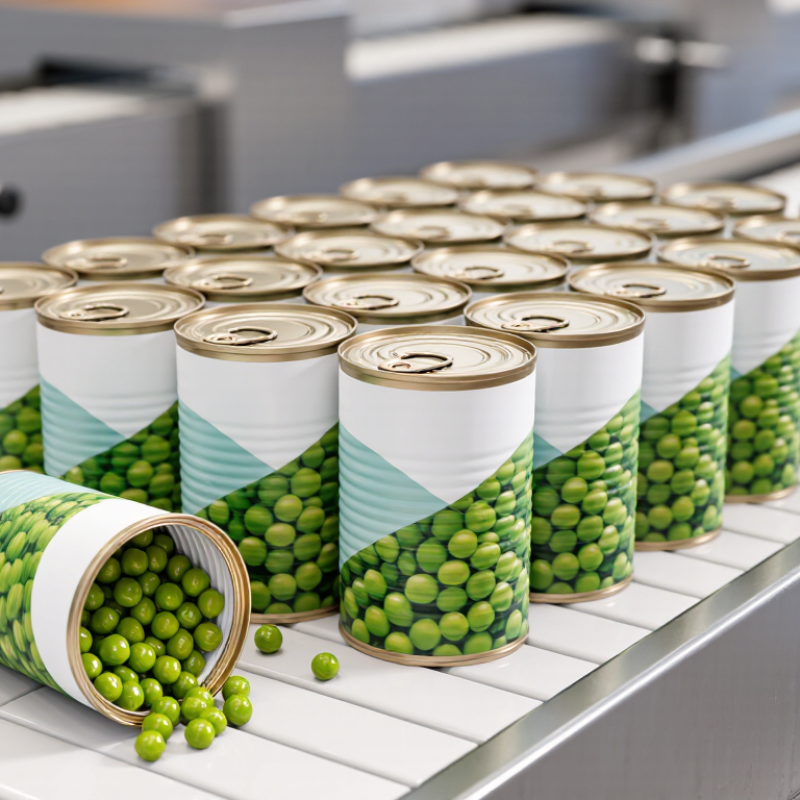
China’s canned green pea industry serves retail, foodservice, and ingredient buyers across global markets. Production clusters often sit near vegetable farms, ports, and established canning regions. The supply chain depends on harvest timing, storage, tinplate, and reliable container access. During peak season, peas move quickly from field to blanching, filling, sterilization, and labeling. This sequence protects color and texture, although quality can vary between crops. A well-packed can should show clear brine and firm peas, not excessive breakage.
The top ten supplier landscape usually includes large exporters, regional processors, and specialized private-label factories. Their strengths differ. Some manage farm contracts closely, while others rely on local collection networks. Global buyers should examine specifications, capacity, export records, and audit evidence. Ask for drained-weight results, pea size ranges, salt levels, packaging dimensions, and shelf-life data. A factory may quote competitively, yet weak carton protection can create losses at destination. That practical gap deserves more attention.
Reliable sourcing also requires traceability from farm lot to finished pallet. Buyers should confirm allergen controls, sanitation routines, metal detection, and recall procedures. Independent laboratory testing can verify microbiological safety, pesticide compliance, and net weight. Import rules vary, so certificates must match the destination market. Communication matters when specifications change. Even experienced teams sometimes overlook seasonal color differences or port delays. A cautious trial order, retained samples, and inspection points can expose weaknesses early. Not every low price is efficient.
China is an established supplier of canned green peas, serving both retail and food-service buyers across multiple overseas markets. The chart shows an indicative destination structure for China’s canned green pea exports under HS 200540, with percentages rounded for market comparison and excluding individual company or brand information.
Source classification: UN Comtrade HS 200540, “Peas (Pisum sativum), prepared or preserved otherwise than by vinegar or acetic acid.” Destination shares are presented as rounded market-level estimates for industry analysis; “Other markets” includes destinations outside the largest listed groups.
Evaluating China’s leading canned green pea suppliers requires more than comparing FOB prices. Start by confirming whether the factory processes peas or only resells them. Request harvest locations, processing dates, annual capacity, and three years of export records under HS 200540. UN Comtrade data can reveal shipment consistency, destination markets, and unusual volume changes. A supplier with stable records is usually easier to assess. Not always.
Product quality should be tested with physical samples. Check drained weight, pea size, color, firmness, salt level, and liquid clarity after opening. Inspect can seams, dents, vacuum strength, and label accuracy. Ask for batch-specific certificates covering microbiological testing, heavy metals, and pesticide residues. ISO 22000 or HACCP certification is useful, but certificates alone prove little. Visit the production line if possible. Watch the washing tanks, sorting tables, retort records, and warehouse temperature controls.
Food safety deserves serious weight. WHO estimates that contaminated food causes about 600 million illnesses and 420,000 deaths globally each year. FAO reports that 13.2% of food is lost between harvest and retail, making raw-material control important. Ask suppliers to demonstrate farm traceability and a mock recall within hours, not days. Review complaint rates, corrective-action reports, and retained samples. A polished audit file can hide weak daily discipline. Small details matter. I would also compare lead times during the peak pea season, because delayed harvests can affect color and texture before the cans reach your warehouse.
Supplier evaluation framework based on verifiable food-safety, regulatory, product-quality, and export-readiness indicators.
| Rank | Evaluation Dimension | Verifiable Benchmark | Evidence Global Buyers Should Request | Why It Matters | Suggested Weight |
|---|---|---|---|---|---|
| 1 | Food-Safety Management System | Documented HACCP-based controls covering raw materials, thermal processing, canning, cooling, storage, and dispatch. | HACCP plan Process-flow diagram Critical-control records | Reduces biological, chemical, and physical food-safety risks. | 20% |
| 2 | Third-Party Certification | Valid certification to a recognized food-safety scheme, such as a GFSI-recognized program, with the correct site and product scope. | Current certificate Audit scope Expiry date Latest audit report | Provides independent verification beyond a supplier’s own declarations. | 12% |
| 3 | China Export Compliance | Facility and product registration or filing status must comply with applicable Chinese export rules, including requirements administered by China Customs. | Customs registration details Export eligibility Destination approval records | Helps prevent customs delays, rejected shipments, and documentation problems. | 12% |
| 4 | Thermal-Process Validation | Commercial canning process established and validated by qualified technical personnel for the specific product, container, and process conditions. | Scheduled process Retort records Temperature charts Deviation procedure | Proper thermal processing is essential for the safety and shelf stability of low-acid canned vegetables. | 15% |
| 5 | Can-Seam and Package Integrity | Routine inspection of double seams, closures, can bodies, corrosion protection, coding, and finished-package integrity. | Seam inspection records Leak-test results Packaging specification Lot coding system | Protects against leakage, contamination, swelling, and transport damage. | 10% |
| 6 | Raw-Material Traceability | Each finished lot should be traceable to the vegetable harvest or supplier lot, processing date, packaging materials, and distribution records. | One-step-back records One-step-forward records Mock-recall results | Enables fast investigation and targeted withdrawal if a quality issue occurs. | 8% |
| 7 | Laboratory Testing and Contaminant Control | Risk-based testing should address microbiological safety, pesticide residues, heavy metals, additives, and other parameters required by the destination market. | Recent COA Sampling plan Accredited-lab details Corrective actions | Supports compliance with importing-country limits and customer specifications. | 10% |
| 8 | Product and Label Compliance | Ingredients, allergen statements, nutrition information, net quantity, drained weight, date coding, country of origin, and language must match the destination market. | Approved artwork Product specification Label review Shelf-life basis | Prevents relabeling costs, regulatory non-compliance, and marketplace rejection. | 8% |
| 9 | Capacity and Supply Continuity | Supplier should demonstrate suitable processing capacity, seasonal raw-material planning, cold-chain or storage controls where applicable, and backup arrangements. | Production schedule Capacity statement Inventory policy Business-continuity plan | Improves reliability for repeat orders and seasonal demand. | 3% |
| 10 | Commercial and Logistics Capability | Clear specifications for minimum order quantity, packaging formats, lead time, Incoterms, palletization, export documents, and shipment performance. | Quotation sheet Proforma invoice Packing list sample On-time delivery history | Allows buyers to compare total landed cost and operational risk. | 2% |
International buyers usually assess Chinese canned green pea suppliers through more than price. The top ten candidates should show stable harvest sourcing, clean processing lines, and export experience. Product samples reveal useful details. Look for bright green peas, soft but firm texture, and clear brine without excessive sediment.
Reliable suppliers normally provide lot numbers, production dates, ingredient lists, and laboratory reports. Ask about pesticide screening, heavy metal testing, microbiological controls, and allergen management. Confirm whether their factories follow recognized food safety systems, such as HACCP or ISO-based procedures. Can sizes also matter. Common formats include easy-open tins for retail and larger cans for foodservice.
My purchasing experience suggests checking consistency across several shipments, not one attractive sample. Ask for a traceability demonstration from farm records to finished cartons. Review carton strength, pallet patterns, container loading, and temperature exposure during transport. Delays happen. A supplier’s response is revealing. Do they explain the cause clearly and offer practical corrective action?
No ranking is perfect. Factory capacity may change between seasons. Certifications may expire or cover only one site. Buyers should independently verify documents with certification bodies and inspect samples before signing long-term contracts. Even small points matter, including drained weight, label language, and pull-tab performance. These details often determine whether a shipment reaches shelves smoothly or creates avoidable complaints.
For global buyers, a China top-10 canned green peas shortlist should begin with measurable standards. Codex Standard CXS 58-1981 covers colour, maturity, drained weight, defects, and container integrity. Suppliers should also provide batch-based microbiological results, pesticide records, and metal-detection checks. FAO food safety guidance stresses preventive controls, not only final-product testing. This matters when cans travel through humid ports and long warehouses.
Packaging choices affect both compliance and commercial performance. Common formats include 400 g retail cans, 2.5 kg foodservice cans, and easy-open lids. Buyers should confirm net weight, drained weight, carton strength, pallet patterns, and language requirements before ordering. Packaging must resist rust, dents, leakage, and thermal damage. UN Comtrade 2023 data for HS 200540 can help compare preserved-pea trade flows, but trade volume alone cannot prove supplier reliability. A certificate alone can mislead.
Tips: Request recent ISO 22000 or HACCP evidence, a valid export health certificate, and destination-market registration records. Ask for the latest third-party audit, not a recycled PDF. Check whether certification covers the actual factory. For U.S. shipments, verify facility registration and importer verification duties. For European shipments, review traceability, additives, allergen controls, and labeling rules. I would also test one pilot shipment. Small details expose weak systems.
China’s canned green pea market offers broad choices for global buyers. Sourcing should begin with product specifications, not a low quotation. Confirm pea size, color, salt level, drained weight, can dimensions, and shelf life. Request recent samples from shortlisted suppliers. Small details matter.
Pricing depends on crop conditions, packing materials, order volume, and delivery terms. Compare quotes using the same specifications and Incoterms. Ask whether prices include cartons, labels, inspection, and port charges. A very low offer may exclude important costs. Recheck every assumption.
Logistics planning requires accurate carton dimensions, pallet patterns, loading capacity, and destination-port requirements. Request production lead time and a clear shipment schedule. Buyer verification should include business registration, factory address, processing certificates, laboratory reports, and traceability records. Review batch codes on sample cans. Arrange an independent inspection before shipment when practical. Check can seams, dents, leakage, net weight, and label accuracy. Food safety systems such as HACCP or ISO-based controls can support credibility, but certificates should be verified with the issuing body. Video calls are useful, though they cannot replace a factory visit. I have seen buyers trust polished documents too quickly. That remains a costly weakness. Keep written specifications, approved samples, payment milestones, and corrective-action terms in the purchase contract. Reliability is built through repeated checks, not confident promises.