
China Top Dairy Products Manufacturers and Suppliers

China’s dairy sector is broad, but choosing a supplier takes more than comparing annual output. Buyers must examine product consistency, cold-chain capability, ingredient specifications, and the traceability of milk from farm to factory. Details matter. A chilled sample, a clear certificate of analysis, and a realistic delivery schedule can reveal more than a polished product catalogue.

The scale is substantial. FAO’s 2024 Dairy Market Review estimated global milk production at about 965 million tonnes in 2023. China’s National Bureau of Statistics reported 41.97 million tonnes of domestic milk production that year, up 6.7% from 2022. These figures provide context, not a guarantee of supplier quality. Still, they show why China’s manufacturers and suppliers attract attention across dairy products, from liquid milk and yogurt to milk powder and cheese. For current sourcing decisions, buyers should check company records and product data directly; national totals cannot show how a specific plant performs.

As IDF Director General Caroline Emond has emphasized, “Dairy is part of the solution to nourishing a growing world.” That perspective helps explain the industry’s importance, though it does not settle every sourcing question. Sustainability claims, for example, need measurable evidence. This guide introduces China’s leading manufacturers and suppliers, the products they offer, and the checks that help buyers assess them. A useful starting point.
China Top Dairy Products Manufacturers and Suppliers

China’s Dairy Market: 41.97 Million Tonnes of Milk Produced in 2023 (NBS)

China produced 41.97 million tonnes of milk in 2023, up 6.7% from 2022, according to the National Bureau of Statistics’ Statistical Communiqué. That is substantial. Yet national output does not show how much milk is available to each processor, or whether supply matches local demand. The USDA Foreign Agricultural Service’s 2024 China Dairy and Products Annual examines production alongside trade and market conditions, a useful reminder that volume is only one part of the picture.

For buyers assessing Chinese dairy suppliers, the figure gives context, not a quality guarantee. Ask for recent test results, traceable farm records, and clear specifications for fat, protein, and microbial limits. Check how milk is chilled and transported; a long journey can make temperature control especially important. Capacity also deserves careful checking. A supplier’s stated annual output may not reflect seasonal availability or the volume it can consistently deliver. I would treat 41.97 million tonnes as a strong market signal, but not as a substitute for factory audits and batch-level verification. The national number is precise. Supplier performance still needs evidence.

Key Product Categories: Milk, Yogurt, Cheese, Butter, and Infant Formula

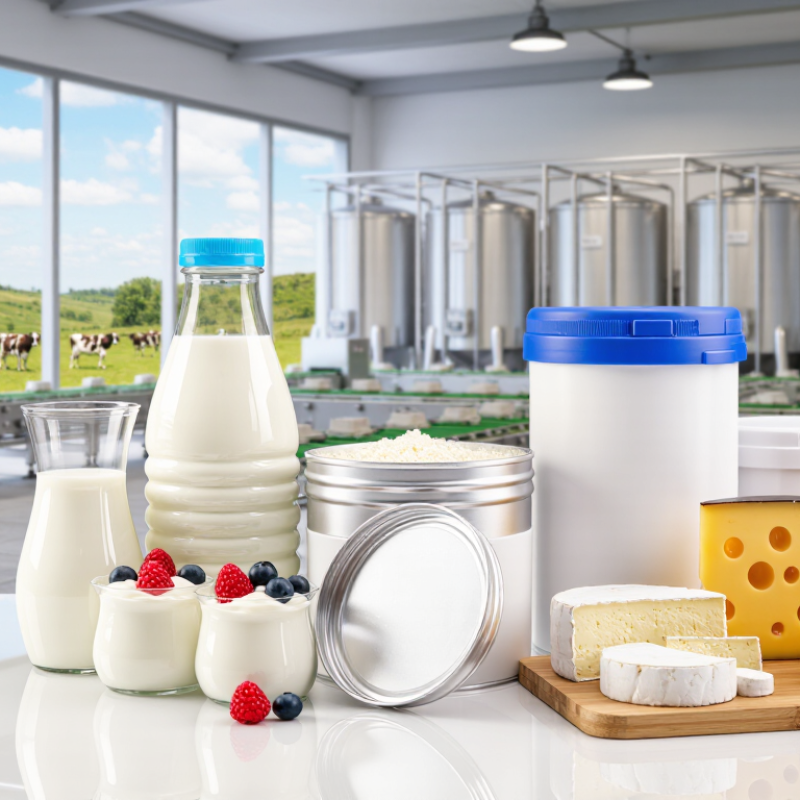
China’s dairy supply base covers everyday staples and specialized nutrition products. Milk ranges from fresh and UHT varieties to powdered formats, each suited to different storage and distribution needs. Check processing details, packaging integrity, and stated shelf life. Yogurt varies in texture, acidity, and live-culture handling. A chilled sample can reveal more about consistency than a catalog image. Small differences matter.

Cheese offerings include fresh, soft, and firmer styles, with flavor and moisture shaped by ingredients and aging. Butter is commonly assessed by fat content, aroma, and how evenly it spreads when cool. Infant formula requires especially careful review of ingredient specifications, batch traceability, and quality documentation. Request current product data and samples before comparing suppliers. Paperwork alone is not the whole picture.

Tips: Match the product to your climate and sales channel. Ask how chilled goods are packed during transit, and confirm minimum order quantities early. For infant formula, review documentation with qualified specialists. Keep a written sample checklist. It prevents rushed decisions. One detail is easy to miss: packaging dimensions can affect storage costs as much as the unit price. Manufacturers may describe similar products differently, so compare specifications line by line rather than relying on category names.

Major Chinese Producers: Yili, Mengniu, Bright Dairy, and New Hope Dairy

China’s leading dairy suppliers operate at very different scales, from nationwide processing networks to regionally focused businesses. Their strengths include fresh-milk collection, large plants, and broad product portfolios. The National Bureau of Statistics reported that China produced 41.97 million tonnes of milk in 2023, up 6.7% year on year. That figure signals a substantial raw-milk base. It does not measure product quality or show how evenly farms and processing capacity are distributed. Scale matters. Not always.

For buyers comparing major producers, check more than annual output. Review cold-chain coverage, product specifications, traceability, and the supplier’s ability to serve your destination market. Large groups may offer dependable volume and multiple dairy categories, while regional suppliers can sometimes shorten delivery routes. China’s dairy market is not uniform; transport distance and local sourcing conditions can change the practical value of a quotation. A low price alone tells little.

Tips: Request recent test certificates and a written specification before sampling. Compare delivery temperature, packaging, and minimum order quantities. Confirm the data directly with suppliers; public production figures cannot verify an individual product batch.

China's Dairy Products: Product Types and Manufacturing Overview

Product Category Main Dairy Ingredient Typical Manufacturing Process Common Packaging Storage and Distribution
Pasteurized milk Fresh cow's milk Milk is heat-treated to reduce harmful microorganisms, then rapidly cooled and hygienically packaged. Plastic bottles, cartons, or pouches Kept refrigerated. Shelf life is limited compared with shelf-stable milk; follow the temperature and use-by instructions on the label.
UHT milk Fresh cow's milk Milk is heated at an ultra-high temperature for a short time and filled into packaging under aseptic conditions. Aseptic cartons or other sealed, light-protective containers Unopened products can generally be stored at ambient temperature as directed on the label. Refrigerate after opening.
Fermented milk and yogurt Milk, with selected starter cultures Milk is heat-treated, inoculated with cultures, and fermented under controlled conditions. Some products are stirred; others set in their containers. Plastic cups, bottles, or multi-portion tubs Usually distributed and stored under refrigeration. Keep chilled and observe the product's date and handling instructions.
Milk powder Milk or concentrated milk Water is removed, commonly by evaporation followed by spray drying, to produce a dry powder. Sealed cans, lined bags, or multi-layer pouches Store unopened powder in a cool, dry place as directed on the package. After opening, keep it tightly sealed and protect it from moisture.
Cheese Milk, starter cultures, and typically a coagulant Milk is coagulated; the curd is cut, drained, and, depending on the style, pressed, salted, and ripened. Vacuum packs, sealed blocks, or portion packs Most cheese is refrigerated. Storage requirements and ripening conditions vary by cheese type and product label.
Cream and butter Milk fat separated from milk or cream Cream is separated from milk. Butter is made by churning cream so that fat separates from the liquid portion. Cartons or bottles for cream; wrapped blocks or tubs for butter Typically kept refrigerated. Follow the package instructions, especially after opening.

Packaging formats and storage requirements vary by product. Always follow the manufacturer's label for handling, temperature, and shelf-life guidance.

Raw Milk Quality: GB 19301-2010 Requires at Least 2.8% Protein

China’s raw-milk protein requirement is a practical quality checkpoint. GB 19301-2010 sets a minimum of 2.8 grams of protein per 100 grams of raw milk. That is a threshold, not a complete quality score. Milk composition can vary with breed, feed, season, and farm management, so a single test should be read alongside other checks.

The scale makes consistent testing important. USDA Foreign Agricultural Service’s China Dairy and Products Annual report estimated China’s milk production at about 42 million metric tons in 2023. At that volume, representative sampling and calibrated laboratory methods matter. For buyers, protein results should be traceable to the sampled lot, with collection time and temperature recorded. A small handling lapse can muddy an otherwise useful result.

Tips: Ask for the test method, sampling record, and recent lot-level results. Compare protein with fat, acidity, and sensory observations; do not treat 2.8% as proof of freshness or safety. Numbers help. Context matters. Even well-run checks can miss variation between tankers, so periodic independent verification is worth considering.

Supplier Evaluation: Production Capacity, Cold-Chain Logistics, and Certifications

Choosing among China’s dairy products manufacturers and suppliers requires more than comparing catalogues. Ask for actual monthly output, not only installed capacity. A plant may handle routine orders well but struggle during peak season. Review recent production records, shift schedules, and backup plans for equipment or power interruptions. Small gaps matter.

Cold-chain logistics deserve close inspection. Request temperature logs from storage, loading, and transit, then check how delays at the dispatch dock are handled. Ask whether vehicles are pre-cooled and how temperature deviations are recorded. Paperwork can look tidy while a handoff remains unclear; verify the process with a shipment example. Certifications should be current and relevant to the specific facility and product category. Check issuing details and scope rather than relying on a certificate image alone.

Tips: Request a sample lot record, a recent temperature trace, and the corrective-action process. Compare them with the supplier’s stated capacity. If answers vary between sales and operations teams, pause and ask for clarification. A checklist helps, but it can miss practical realities. That is worth admitting.

China Top Dairy Products Manufacturers and Suppliers — Supplier Evaluation

Cold-Chain Logistics Benchmarks: Maximum raw-milk temperatures specified by selected regulatory standards

Lower temperature limits require stronger cold-chain controls. These regulatory benchmarks apply to the stated raw-milk conditions, not every dairy product. Production capacity and certifications should be verified separately for each supplier.

Sources: EU Regulation (EC) No 853/2004, Annex III, Section IX; U.S. FDA Grade “A” Pasteurized Milk Ordinance guidance.