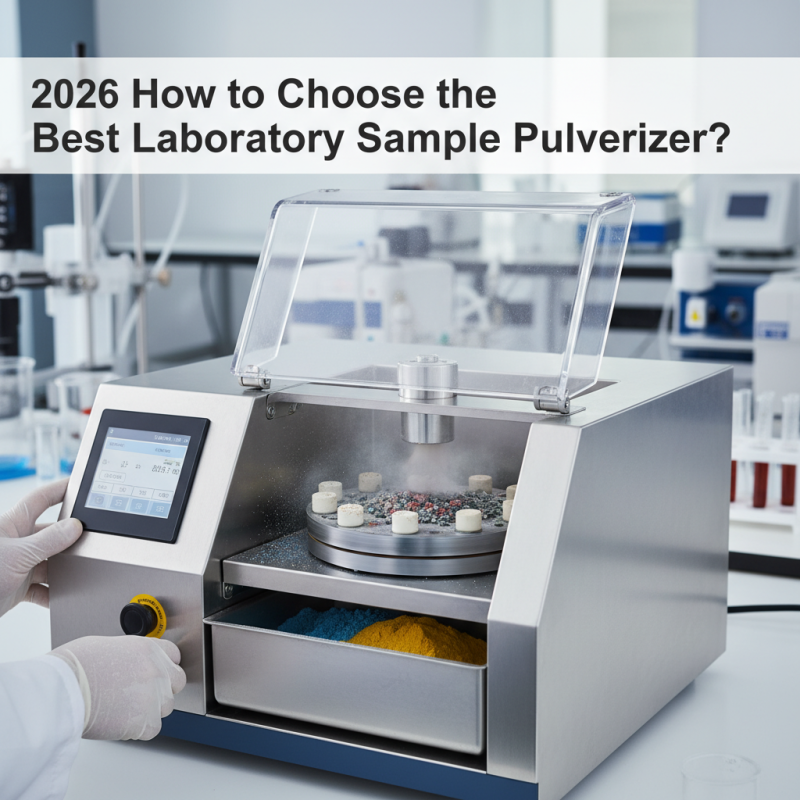
2026 How to Choose the Best Laboratory Sample Pulverizer?
Choosing the right laboratory sample pulverizer is essential for accurate results. Many factors come into play when selecting a pulverizer. The choice impacts the quality of your research.
laboratory sample pulverizers vary in design, size, and features. You need to consider your specific needs. Think about the materials you will be grinding. Different samples require different techniques.
Another aspect to think about is ease of use. Some pulverizers are user-friendly, while others may need training. A complicated machine can waste time and resources. Balancing functionality with simplicity is crucial. You may find the perfect model, but realize it doesn't meet your lab's workflow. This reflection can help guide your choice effectively.
Understanding the Purpose of a Laboratory Sample Pulverizer
When selecting a laboratory sample pulverizer, understanding its purpose is crucial. These devices are designed to reduce samples into fine powders. This process is essential for various applications, such as analytical testing and material research. Effective pulverization ensures consistent sample size, which impacts the accuracy of test results. Inconsistent particle sizes can lead to unreliable data, affecting research conclusions.
Laboratory sample pulverizers come in different types, each serving specific needs. For instance, some are suitable for hard materials, while others work better on softer ones. Your choice should depend on the materials you handle. It’s essential to assess the equipment's features. Look for factors like feed size capacity, desired particle size, and durability. This evaluation helps you avoid potential issues during operation. Moreover, remember that maintenance matters. Neglecting maintenance can lead to inefficiencies or equipment failure down the line.
Understanding the intricacies of a pulverizer may involve some trial and error. Not every choice will suit your needs perfectly. Gaining experience with various materials can lead to stronger decisions in the future. Emphasizing clarity in your objectives helps streamline the selection process. Consistency in sampling and testing will benefit your research efforts significantly.
Key Features to Consider When Choosing a Pulverizer
When selecting a laboratory sample pulverizer, key features play a crucial role. Consider the material of the grinding chamber. Stainless steel is common due to its durability and resistance to wear. According to industry reports, stainless steel pulverizers can last significantly longer than other materials. This longevity can reduce replacement costs over time.
Another important feature is the particle size reduction capability. Pulverizers should provide adjustable settings to produce different granularity levels. Research indicates that some advanced models can achieve particle sizes as fine as 10 microns. This level of precision is critical in laboratories where sample integrity must be maintained.
Noise levels are also worth considering. A quieter machine can improve the working environment. Studies show that high noise levels can lead to decreased productivity in laboratory settings. Finally, ease of cleaning and maintenance is vital. Machines that are difficult to clean can lead to cross-contamination and affect accuracy. It’s essential to weigh these factors against your specific needs in the lab.
Different Types of Laboratory Sample Pulverizers Available
Choosing a laboratory sample pulverizer involves understanding the types available. Each type serves specific needs, contributing to more efficient sample preparation. Hammer mills are popular for their robust design. They crush materials quickly, making them ideal for hard samples. However, they can create heat during the process, potentially altering sample integrity.
Ball mills are another option. They provide finer grinds, offering uniform particle size. This is essential for many analytical processes. Yet, they often operate more slowly than hammer mills. Users should consider the time investment needed for different mills. A balance between speed and consistency is crucial.
Another type, the disc mill, can handle larger samples effectively. It can produce a fine powder with minimal heat generation. However, it may require more maintenance and is not as versatile for different materials. Understanding these nuances helps in making a better-informed choice. A careful evaluation of specific requirements is essential before purchasing any pulverizer.
Evaluating Performance Factors for Laboratory Pulverizers
Choosing the right laboratory sample pulverizer involves evaluating several performance factors. The speed and energy consumption are crucial. A machine that operates too slowly may not provide the efficiency needed for high-volume tasks. Conversely, a machine that uses excessive energy may raise operational costs significantly.
Particle size distribution is another key aspect. It’s vital to achieve the desired fineness for various applications. Too coarse results can affect the accuracy of tests. This can lead to misleading conclusions in research. Additionally, consider the materials the pulverizer can handle. Not all machines are appropriate for every substance. This limitation can result in poor sample preparation or even damage to the equipment.
Ease of maintenance is often overlooked but important. A machine that is difficult to clean or service can cause delays. These issues may lead to frustration among users. It's essential to weigh the pros and cons of each model. Reflecting on past experiences with different machines can improve decision-making. Look for feedback from peers. This can provide insights into how well different pulverizers perform under various conditions.
Budgeting for Your Laboratory Sample Pulverizer Purchase
When budgeting for a laboratory sample pulverizer, cost considerations are crucial. The price varies significantly based on size and features. For instance, small-sized pulverizers may range from $500 to $2,000. In contrast, larger and more advanced models can cost upwards of $5,000. A report from the Laboratory Equipment Market revealed a 6% annual growth in laboratory equipment spending in recent years, emphasizing the need for smart financial planning.
Consider not only the initial purchase price but also the maintenance costs. Regular servicing may add another $200 to $600 annually. Be mindful of the operating costs as well. Electricity usage can increase your expenses. Some reports suggest that running a high-performance pulverizer consumes about 1.5 to 3 kWh per operation. These figures should prompt deeper reflection on the long-term financial impact of your choice.
Don’t overlook the importance of return on investment (ROI). A good pulverizer can streamline workflows and reduce operational delays. Yet, if underused, it may become a costly asset. Aim for a model that balances features with your specific needs. Take the time to analyze your lab’s demands. Proper budgeting could save you from future financial strain.
2026 How to Choose the Best Laboratory Sample Pulverizer? - Budgeting for Your Laboratory Sample Pulverizer Purchase
| Feature | Description | Price Range (USD) | Recommended Usage |
| Material Type | Choose a pulverizer based on the material being processed (e.g., soil, rock, grains). | $500 - $1500 | Laboratories requiring material versatility. |
| Pulverization Method | Decide between cryogenic grinding, hammer milling, or ball milling techniques. | $1000 - $3000 | Specific applications requiring different pulverization techniques. |
| Capacity | Select based on the expected daily throughput. | $800 - $5000 | High-volume laboratories. |
| Ease of Cleaning | Make sure the pulverizer is easy to disassemble and clean. | $600 - $2000 | Labs focusing on cross-contamination prevention. |
| Noise Level | Consider the operational noise for a conducive working environment. | $700 - $2500 | Laboratories situated in noise-sensitive areas. |