How to Choose the Right Vacuum Conveyor Belt for Your Business?
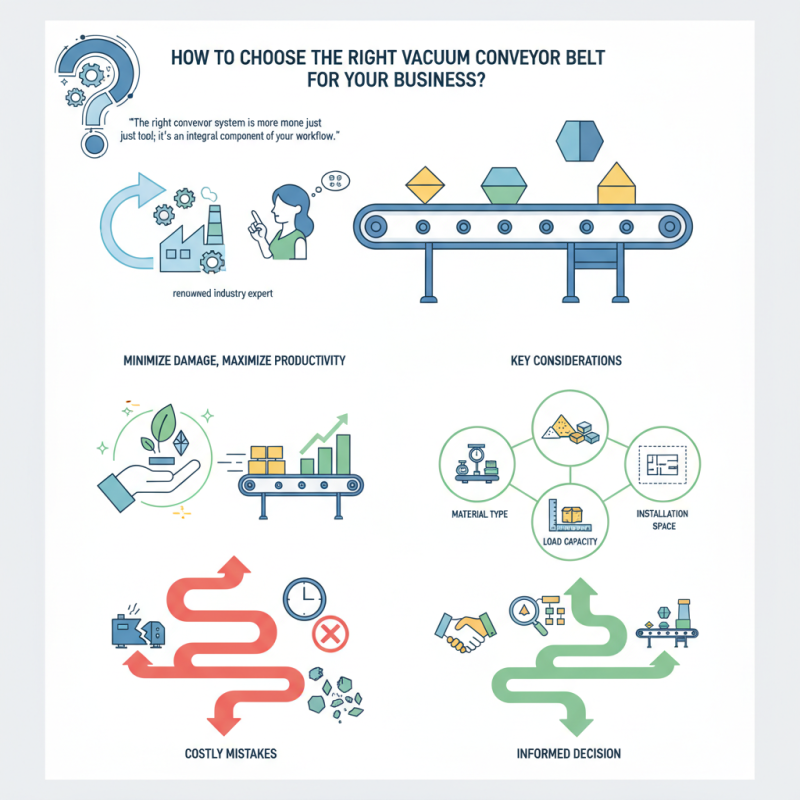
In the competitive world of manufacturing and logistics, selecting the right Vacuum Conveyor Belt is crucial for operational efficiency. Renowned industry expert, Dr. Emily Hart, once stated, "The right conveyor system is more than just a tool; it’s an integral component of your workflow." Her insight underscores the importance of making informed decisions in this area.
Vacuum Conveyor Belts serve a vital function in transporting materials gently and efficiently. They minimize product damage while maximizing productivity. Choosing the right model involves considering factors like material type, load capacity, and installation space. Many businesses overlook these specifics, which can lead to operational headaches down the line.
Ignoring these details could mean increased downtime or even product loss. Balancing cost and quality is essential but challenging. Investing in the wrong Vacuum Conveyor Belt can lead to costly mistakes. Ultimately, understanding your needs and seeking expert advice can guide your selection process.
Understanding the Basics of Vacuum Conveyor Belts
When selecting a vacuum conveyor belt, understanding the basics is crucial. Vacuum conveyor belts work by using air suction to move materials. This functionality is vital in industries like food, pharmaceuticals, and packaging. According to a recent report from Allied Market Research, the global vacuum conveyor market is projected to reach $2.1 billion by 2026, growing at a CAGR of 5.4%. This indicates a significant demand for efficient conveyor systems.
The material of the conveyor belt should be a top priority. Different applications require different materials, like rubber or PVC. The right choice impacts performance and longevity. Research shows that proper maintenance can extend the lifespan of these belts by up to 40%. Regular checks and cleaning help in preventing unexpected failures. Using subpar materials may result in increased downtime and production loss, highlighting the importance of informed decisions.
Another factor is the belt width and length. An ill-fitted belt can affect efficiency and lead to unnecessary wear. For example, a belt too wide can waste energy, while one too narrow may not handle the load well. Understanding these specifications is essential for maintaining operational efficiency. Inadequate size can complicate logistics, causing potential bottlenecks. Choosing the right dimensions is, therefore, integral to ensuring a smooth production flow.
Identifying Your Business Needs and Requirements
Choosing the right vacuum conveyor belt starts with understanding your business needs. Consider the materials you handle. Different materials may require specific belt features. For example, granular products may need a more durable surface to prevent wear. Think about the size of your operation. Small facilities may not require large belts, while larger setups may need high-capacity options.
Evaluate the environment where the belt will be used. Is it dusty or humid? These factors can impact performance. It’s crucial to analyze the temperature ranges. Some belts perform better in extreme conditions. Reflect on the flexibility you need. If your process changes often, look for adaptable belts. Remember that the initial cost may not reflect long-term value. Choosing a belt that fits your operational requirements is vital for efficiency.
How to Choose the Right Vacuum Conveyor Belt for Your Business?
| Feature | Requirement | Example Material |
| Belt Width | Depends on the volume of material | Plastic pellets |
| Belt Material | Resistance to chemicals and wear | Rubber or PVC |
| Load Capacity | Weight of material to be transported | Cement or grain |
| Speed | Required transfer speed for efficiency | Food products |
| Hygienic Standards | Compliance with industry regulations | Pharmaceuticals |
Evaluating Different Types of Vacuum Conveyor Belts
Vacuum conveyor belts come in various types, each designed to meet specific needs. The most common types include flat belts, modular belts, and tube conveyor systems. Flat belts are simple and versatile, ideal for transporting bulk materials. Modular belts offer flexibility and easy maintenance, making them suitable for intricate production lines. Tube conveyor systems are perfect for discreet transport, particularly in industries like food processing.
When evaluating different types, consider the material characteristics. Some belts are designed for high temperature or corrosive environments. Others may not withstand certain chemicals. The choice of material impacts durability and performance. Look at the load capacity and speed requirements too. Ensure the chosen belt can handle the weight and speed needed for your operations.
Maintenance needs vary with each type. Some designs require more frequent attention, while others allow for longer intervals. Evaluate your workforce's capability to carry out necessary upkeep. A plan for regular checks can prevent costly downtime. Reflect on your specific business needs. Choosing the right vacuum conveyor belt is not just a task; it’s an investment in efficiency.
Key Features to Consider When Selecting a Conveyor Belt
When selecting a vacuum conveyor belt for your business, consider key features that influence efficiency and performance. Vacuum conveyor systems, according to industry reports, boost productivity by approximately 20%. This highlights the importance of choosing the right belt.
Material compatibility is crucial. Ensure the belt material is suitable for your products. Different materials can handle various loads or chemical exposures. A mismatch can lead to breakdowns or contamination. Consider the size and thickness of the belt. This affects its durability and handling capacity.
Tips: Always test the belt in your production environment. Monitor its performance closely during initial use. Look for signs of wear or inefficiency. Also, assess if the belt’s surface texture meets your needs. A textured surface can enhance grip for unstable or irregularly shaped items.
Consider the maintenance requirements as well. Some belts need regular cleaning, while others can be more low-maintenance. Industry findings indicate that 30% of conveyor issues arise from poor maintenance practices. This emphasizes the need for reliability in your chosen belt. Engage with experts for insights tailored to your specific operations.
Assessing Costs and Return on Investment for Conveyor Belt Choices
Choosing the right vacuum conveyor belt involves careful financial scrutiny. Understanding the total costs is imperative. Costs vary based on material, size, and durability. A well-made belt might seem more expensive but can prove cost-effective in the long run.
Analyze the return on investment (ROI) from your conveyor choice. A higher-quality belt can minimize breakdowns and improve efficiency. This leads to significant savings over time. Additionally, consider the operational costs. Energy efficiency will impact your monthly expenses. A belt that consumes less power could result in substantial annual savings.
Reflect on maintenance costs as well. Cheaper belts might require frequent replacements or repairs. This could lead to hidden expenses. Look at case studies or industry reports for insights. Real-life examples provide clarity on long-term benefits. Balancing initial costs with future savings is crucial. Your choice shouldn’t be solely price-driven.