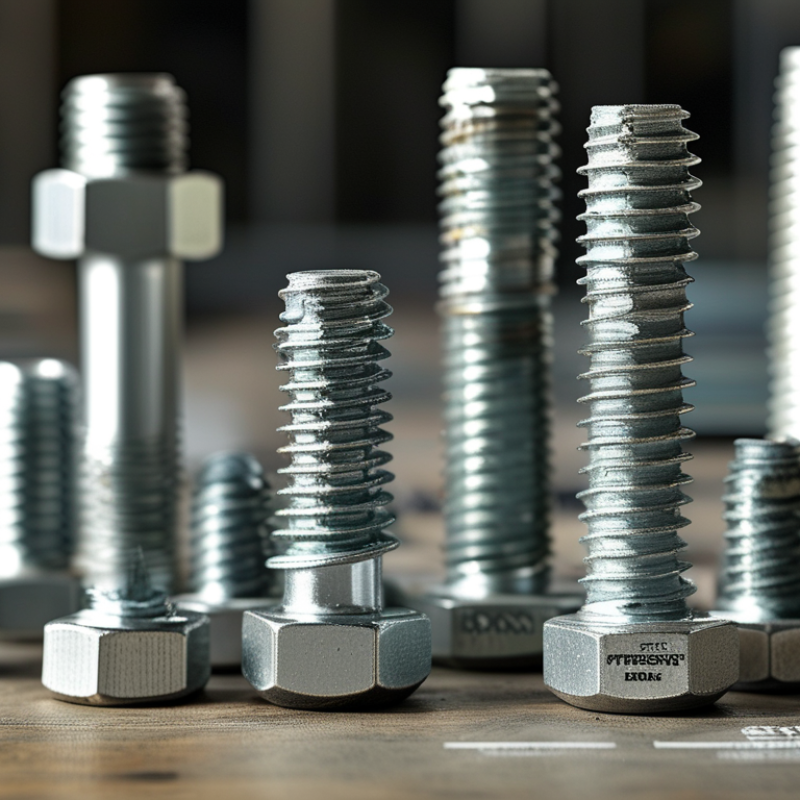
Choosing the right Bolt Guide for global sourcing requires more than comparing prices or browsing attractive product pages. The guide should connect bolt geometry, thread type, material grade, coating, load requirements, and installation conditions. It must also clarify dimensions, tolerances, testing methods, and traceability. A polished catalog can still hide critical gaps.
Dr. John H. Bickford, a respected author on bolted-joint engineering, wrote, “The design of a bolted joint is not complete until the joint can be assembled and maintained.” This principle remains valuable for international purchasing. A useful Bolt Guide should help buyers check whether suppliers can provide consistent batches, inspection records, accurate packaging, and practical installation guidance. Regional standards may differ. So should the questions.
Look closely at the working environment. Salt spray near a port may demand better corrosion protection. A vibrating machine may require stronger retention control. Tight delivery schedules may expose weak inventory planning. These details affect the correct bolt choice. Supplier audits, sample testing, and third-party reports can strengthen confidence, but they do not remove every risk. No checklist is perfect.
This guide will examine how to compare technical specifications, supplier capability, compliance evidence, and total sourcing cost. It will also question common assumptions, including the belief that a higher-strength bolt is always the safer option. The right decision balances performance, availability, serviceability, and verified quality. In global sourcing, precision begins with better questions.
When sourcing bolts globally, classify the guide by ISO 898-1 strength class before comparing suppliers. The class appears on the bolt head.
Class 8.8 is a practical guide type for general machinery, frames, and equipment joints. It offers a strong balance between load capacity, cost, and availability.
Class 9.8 suits applications needing higher strength without moving to the most demanding category. It is less common, so confirm regional supply before specifying it.
Class 10.9 supports high-preload joints, such as compact machine connections and heavily loaded assemblies. It needs controlled tightening and compatible nuts.
Class 12.9 provides very high strength for limited-space, high-load designs. However, it can be less forgiving under fatigue, poor alignment, or excessive tightening. Stronger is not always safer.
The neat classification helps.
In practical sourcing, I check the head marking, test reports, thread size, coating, and batch traceability. ISO 898-1 strength class does not describe corrosion resistance, temperature performance, or fatigue life. Those factors need separate specifications.
A supplier may offer the correct class but unsuitable plating or incomplete inspection records. I once treated class 10.9 as a complete purchasing solution; that was too simple.
Joint design, bolt length, thread engagement, washer hardness, and tightening method changed the result. For reliable global sourcing, use the strength class as the starting filter, then verify the complete assembly and required documentation.
How to Choose the Right Bolt Guide for Global Sourcing?
Bolt guides should match the fastener standard, not only its nominal diameter. ISO 4014 bolts have partial threads, while ISO 4017 bolts are fully threaded. ASME B18.2.1 bolts follow different head and dimensional conventions. These differences affect guide length, entry clearance, and seating accuracy.
Measure the bolt head across flats and across corners before selecting the guide. Check the head height, shank diameter, and required under-head length. A guide that fits the thread may still reject the larger head. For example, a narrow bore can damage the coating or stop installation halfway. Leave practical clearance, but avoid excessive movement.
Use the standard’s dimensional tables and verify the latest revision. Then compare them with the supplier’s actual inspection data. Samples matter. A drawing can hide tolerance problems. In mixed sourcing, metric and inch dimensions may look similar but perform differently. That mistake is easy to make.
I would also confirm whether the guide supports partial or full thread engagement. Test the guide with clean, coated, and slightly worn bolts. Real production rarely matches perfect laboratory parts. One assumption may fail here: “standard” does not mean identical across every supplier. Record the measured dimensions, accepted tolerances, and test conditions before approving the design.
When choosing a bolt guide for global sourcing, verify the material before comparing price. Request the exact alloy grade, heat-treatment condition, batch number, and mill test report. Confirm chemical composition with independent positive material identification when the application is critical. ASTM A370 provides mechanical test methods for steel products, while ASTM E1476 supports material identification practices. Certificates help, but they can still contain errors.
Coatings need equal scrutiny. Ask for coating type, measured thickness, adhesion results, and thread-fit inspection. For threaded fasteners, ASTM F1941 covers electrodeposited coatings and related requirements. ASTM B117 salt-spray testing can compare coating performance under controlled conditions. It does not predict service life in every climate. A bolt guide exposed to coastal humidity may need different protection from one used indoors. Small details matter.
Corrosion risk should match the installation environment. Record chloride exposure, temperature, condensation, and contact with dissimilar metals. For stainless materials, ASTM G48 can evaluate resistance to localized pitting in aggressive conditions. The NACE IMPACT study estimated global corrosion costs at about 2.5 trillion dollars annually, equal to roughly 3.4% of global GDP. It also reported that 15% to 35% of corrosion costs could be avoided through better practices. Do not trust a glossy report alone. Require batch-specific results, test dates, laboratory details, and acceptance limits. That extra verification feels slow, but a failed coating is slower.
Use this comparison matrix to define the bolt specification, request objective evidence from suppliers, and select ASTM tests that match the material, coating, environment, and intended service.
| Application and Environment | Recommended Material or Grade Family | Typical Surface Condition or Coating | Key ASTM Material or Product References | Useful Verification Tests | Corrosion-Resistance Evidence | Global Sourcing Checkpoint | Selection Guidance |
|---|---|---|---|---|---|---|---|
| General-purpose indoor assembly with moderate loads and low humidity | Carbon steel, ASTM A307 Grade A Suitable for many ordinary structural and mechanical fastening applications where higher strength is not specified. | Plain, oil-finished, or zinc-coated according to the purchase specification | ASTM A307 for carbon steel bolts and studs ASTM A370 for mechanical testing practices | Tensile or proof-load testing where specified Dimensional and thread inspection Hardness testing when included in the purchase requirements | Salt-spray testing under ASTM B117 may compare finished lots, but it does not directly predict service life. | Confirm grade marking, heat number, mechanical test results, thread system, nominal diameter, pitch, and tolerance class. | Best for controlled indoor conditions |
| High-strength structural steel connections exposed to normal outdoor conditions | High-strength structural bolt assemblies covered by ASTM F3125 Grade and assembly designation must be stated on the purchase order. | Plain, mechanically galvanized, or hot-dip galvanized only when permitted by the applicable assembly and project specification | ASTM F3125/F3125M for high-strength structural bolts Applicable structural connection and coating requirements must also be stated separately. | Tensile strength, hardness, dimensional inspection, thread inspection, and assembly verification as required by the applicable grade. | For zinc-coated products, verify coating type and thickness using the applicable coating specification; do not substitute a generic salt-spray duration for structural compliance. | Check lot traceability, manufacturer’s certificate, bolt-head markings, nut and washer compatibility, and whether galvanized threads were properly matched. | Use only with a defined structural specification |
| Outdoor equipment requiring a common zinc finish and moderate atmospheric protection | Carbon or low-alloy steel fastener with a specified zinc coating | Electroplated zinc, typically with a passivation or conversion finish | ASTM F1941/F1941M for electrodeposited coatings on threaded fasteners ASTM B633 for electrodeposited zinc coatings on iron and steel | Coating thickness by ASTM B499 magnetic method or ASTM B568 X-ray fluorescence method, when applicable Thread gauge inspection after plating | ASTM B117 can be used as a comparative quality-control test when exposure duration and failure criteria are defined in advance. | Specify coating classification, thickness, chromate or conversion finish, hydrogen-embrittlement controls, and packaging conditions. | Good for mild to moderate atmospheres |
| Outdoor or industrial service needing a thicker zinc barrier than typical electroplating | Carbon steel fasteners suitable for hot-dip galvanizing | Hot-dip zinc coating with a specified coating grade or minimum thickness | ASTM F2329/F2329M for hot-dip galvanized coatings on carbon and low-alloy steel fasteners ASTM A153/A153M may apply to hot-dip zinc coatings on iron and steel hardware | Coating thickness and uniformity inspection Visual inspection for bare areas, excess zinc, blisters, and blocked threads Dimensional and nut-fit checks after galvanizing | Coating thickness and visual acceptance are normally more relevant than an isolated salt-spray result. Zinc provides sacrificial protection to exposed steel. | Confirm galvanizing standard, coating grade, thread allowance, centrifuging requirements, lot identification, and storage protection against white rust. | Preferable for many outdoor steel assemblies |
| Food-processing, clean-service, architectural, or humid environments where a clean metallic surface is required | Austenitic stainless steel, ASTM F593 Group 1 or Group 2 families The exact alloy and condition must be specified; stainless steel is not automatically suitable for every chemical environment. | Passivated or cleaned stainless steel; avoid applying a coating unless galvanic and contamination risks have been evaluated | ASTM F593 for stainless steel bolts, screws, studs, and similar fasteners ASTM A967/A967M for chemical passivation treatments of stainless steel parts | Alloy verification by X-ray fluorescence or other approved positive-material-identification method Tensile, hardness, and dimensional tests as specified Passivation verification under the selected ASTM A967 practice | Use a corrosion test appropriate to the environment. Neutral salt spray may not represent acidic, alkaline, chloride, or food-process exposure. | Verify alloy designation, condition, magnetic response limitations, surface cleanliness, passivation record, and separation from carbon-steel packaging. | Strong general option for humid service |
| Marine, coastal, or chloride-rich environments with extended exposure | Corrosion-resistant stainless steel selected for the actual chloride and temperature conditions A higher-alloy grade may be required; selection should be based on engineering review rather than the word “stainless.” | Clean, passivated surface; avoid dissimilar-metal contact or electrically isolate the joint where galvanic corrosion is possible | ASTM F593 for stainless steel fastener requirements ASTM A967/A967M for passivation treatment requirements ASTM G85 may be used for modified salt-spray procedures when the specified method is relevant | Positive-material identification, surface inspection, passivation verification, tensile testing, thread inspection, and galvanic compatibility review. | Define the exposure method, temperature, chloride concentration, test duration, and acceptance criteria. No single ASTM salt-spray result establishes universal marine service life. | Require alloy certificates, heat traceability, packaging that prevents iron contamination, and a documented review of washer, nut, and mating-material compatibility. | Requires environment-specific engineering |
| High-temperature equipment or applications where ordinary zinc coatings are unsuitable | Heat-resistant alloy or stainless fastener selected for the design temperature | Usually plain, passivated, or specially treated; zinc coatings may lose performance at elevated temperatures | Applicable material and fastener standard must be identified by alloy and strength class. ASTM F593 may apply to covered stainless fasteners, while other alloys require their specific material specification. | Elevated-temperature tensile or stress-rupture testing when required by the design Hardness, chemical composition, dimensional, and thread inspections | Use an oxidation, thermal-cycling, or high-temperature corrosion method that represents the service condition; room-temperature salt spray alone is inadequate. | Request temperature capability, heat-treatment records, alloy chemistry, lot traceability, and evidence that coating or lubricant remains compatible with the operating temperature. | Select by temperature and load, not coating alone |
| Assemblies where coating damage, hydrogen embrittlement, or torque-tension variation could create a safety risk | High-strength carbon or alloy steel fastener with a controlled coating and installation process | Zinc electroplating, mechanical zinc, zinc flake, or another specified system; coating choice must match fastener strength and installation requirements | Applicable fastener product standard ASTM F1941/F1941M for electrodeposited coatings on threaded fasteners ASTM B633 where electrodeposited zinc requirements apply | Coating thickness, thread fit, torque-tension testing, dimensional inspection, and hydrogen-embrittlement evaluation when required by the specification. | Salt-spray performance should be reported together with coating thickness, pretreatment, and failure criteria; it should not replace delayed-fracture or process-control requirements. | Confirm post-plating baking requirements, plating process controls, lot segregation, lubricant compatibility, installation torque method, and certificate traceability. | Use enhanced process control for critical joints |

A reliable bolt guide starts with fit, load, material, and operating temperature. Ask suppliers for dimensional drawings, tolerance data, and test records. A guide that looks precise may still create binding during assembly. Check the bore diameter, guide length, mounting pattern, and surface finish against your application.
ISO 9001 shows that a supplier controls documented processes and corrective actions. It does not automatically prove that every bolt guide meets your drawing. For automotive applications, IATF 16949 indicates stronger controls for risk management, process capability, and defect prevention. Request the current certificate and verify its scope. A certificate without relevant production coverage deserves questions.
PPAP records can reveal how the supplier manages samples, materials, measurements, and process changes. Review the control plan, dimensional results, material certificates, and capability studies. Lot traceability should connect each shipment to raw material, machine, operator, inspection results, and production date. Ask for a sample label and traceability report. Test the process.
In sourcing reviews, I have learned that paperwork can look excellent while shop-floor discipline remains inconsistent. I once found inspection records with identical readings across many lots. That pattern required investigation. It may indicate rounded reporting, not stable production. Schedule a remote audit or independent inspection when risk is high. Keep acceptance criteria visible, measurable, and linked to the approved drawing.
How to Choose the Right Bolt Guide for Global Sourcing?
Choosing the right bolt guide starts with more than unit price. It requires a clear comparison of landed cost, MOQ, lead time, and quality risk. When I evaluate suppliers, I calculate product cost, packaging, freight, insurance, import duties, and inspection fees. A cheaper quotation can become expensive after delivery. Ask for a complete cost breakdown.
MOQ also affects cash flow and storage. A large minimum order may reduce the unit price, but it can leave slow-moving stock in your warehouse. Request a trial quantity when possible. Lead time needs equal attention. Confirm production days, inspection timing, shipping schedules, and realistic buffer days. Promises are not schedules.
Before approval, define AQL 1.0 in the purchase specification. It indicates a strict acceptance level for sampling inspection, not zero defects. State the critical dimensions, material grade, surface finish, thread fit, and packaging requirements. An independent inspection can check samples before shipment. Use the same criteria for every supplier.
I once approved a quotation after comparing only unit prices. The landed cost later exceeded our estimate because freight and rework were missing. That mistake was avoidable. A spreadsheet can still mislead. Review actual shipping records and recent inspection results, then compare suppliers on total risk. Keep the calculation transparent. Costs change. Quality evidence matters more than confident promises.