
Top 10 Milking Parlour Equipment Suppliers Worldwide?

Choosing reliable milking parlour equipment requires more than comparing prices or counting automation features. Farmers need systems that suit herd size, labour availability, building design, and daily routines. A rotary parlour may improve throughput on a large dairy, while a herringbone system can offer simpler access and maintenance for smaller operations.

Dr. Jack Rodenburg, a respected Canadian dairy systems specialist, has said, “A milking system must work with the cow, not against her.” This principle guides our review of the top 10 milking parlour equipment suppliers worldwide. The assessment considers milking speed, udder health, operator safety, cleaning performance, energy use, software integration, and after-sales support. Real farm conditions matter. Muddy yards, limited water pressure, winter temperatures, and inconsistent maintenance can expose weaknesses that brochures never mention.

No ranking is flawless. Supplier performance may vary between regions, dealers, and installation teams. A technically advanced parlour can still disappoint when training is weak or spare parts arrive slowly. Therefore, this overview combines manufacturer capabilities with practical purchasing concerns. It looks beyond stainless steel and touchscreen controls. It asks whether each supplier can deliver dependable equipment, measurable hygiene, and responsive service over many years. The final choice should reflect the farm’s cows, people, budget, and realistic working conditions.
Top 10 Milking Parlour Equipment Suppliers Worldwide?

What Is Milking Parlour Equipment?

Milking parlour equipment is the working system used to milk cows efficiently, hygienically, and with less physical strain.

It includes the milking stalls, vacuum pump, teat cups, pulsators, milk lines, receiver vessels, and control panels. Some parlours also use sensors to record milk flow, yield, conductivity, or unusual changes in animal behavior.

The vacuum system gently draws milk from the udder through the teat cups. Pulsators regulate the pressure rhythm, helping protect teat tissue during milking.

Milk then travels through sealed pipes to a receiver and cooling tank. Rapid cooling matters because warm milk allows bacteria to multiply quickly. Cleaning systems flush the equipment with measured water, detergent, and sanitizer cycles. Small faults matter.

A practical parlour also needs non-slip flooring, safe animal gates, clear walkways, suitable lighting, and comfortable operator access. Poor design can increase waiting time and cause avoidable stress for both cows and workers.

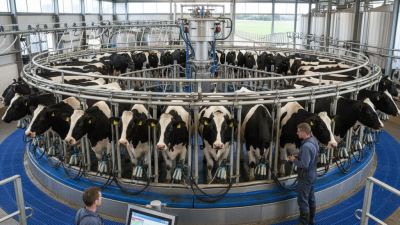
Equipment suppliers usually offer rotary, herringbone, parallel, or walk-through layouts. The best choice depends on herd size, labor, building space, water supply, and maintenance skills.

Bigger is not always better. An automated system may reduce routine labor, but it still requires trained checks and careful calibration.

I have seen farms focus on speed while overlooking cleaning access. That assumption can fail.

Reliable performance comes from correct installation, daily observation, scheduled servicing, and honest records of faults.

Key Equipment Used in Modern Milking Parlours

Modern milking parlours depend on coordinated equipment, not a single machine. The milking cluster connects teat cups, short milk tubes, and long milk lines. Pulsators control alternating vacuum, helping protect teat tissue during extraction. A stable vacuum pump and accurate regulator reduce liner slips and uneven milking. No system is perfect. Operators should check air leaks daily, because small faults can lengthen milking and stress cows.

Milk meters record yield, flow rate, and conductivity for each animal. These readings support veterinary decisions and help identify slow milking or possible udder problems. A receiver jar separates milk from air before the sanitary pipeline carries it to the cooling tank. Plate coolers remove heat quickly, while insulated storage maintains consistent temperatures. Automated cleaning systems circulate water, detergent, and approved sanitizer through every product-contact surface. Keep it clean. Manual inspection still matters around gaskets, claw pieces, and dead ends where residue may remain.

A reliable supplier should provide correctly sized equipment, installation records, operator training, and accessible service support. Parlour design also needs teat-spray units, animal identification, drafting gates, lighting, and non-slip flooring. These details influence hygiene, animal movement, and worker safety. Buyers should compare measured performance, spare-part availability, cleaning verification, and total operating cost. Cheap equipment can become expensive when downtime interrupts twice-daily routines. Staff feedback is often overlooked. Advanced controls may still underperform when operators find them confusing or maintenance takes too long.

Top 10 Milking Parlour Equipment Suppliers Worldwide? - Key Equipment Used in Modern Milking Parlours

A practical overview of the principal equipment categories supplied for modern commercial milking parlours

No. Equipment Category Typical Use in a Modern Parlour Common Technical Range Primary Performance Benefit Important Selection Criteria
1 Milking Vacuum System Creates and maintains the vacuum required for milk extraction and liner operation. Common operating vacuum: approximately 40–50 kPa, depending on parlour design and animal type. Stable milking performance and reduced liner fluctuation. Pump capacity, reserve air capacity, automatic regulation, noise level and service access.
2 Milking Clusters and Liners Attach to the teats and transfer milk from the udder to the milk line. Four-teat clusters are standard for dairy cows; liner dimensions vary by teat size and breed. Consistent teat stimulation, milk flow and attachment stability. Liner material, teat compatibility, weight, claw design and replacement interval.
3 Pulsation System Alternates vacuum and air around the liners to imitate the natural suckling cycle. Typical pulsation rates are about 50–70 cycles per minute, with adjustable ratios. Supports udder health, comfortable milking and efficient milk removal. Electronic or pneumatic control, accuracy, synchronization and ease of calibration.
4 Milk Pipeline and Receiver Group Collects milk from individual units and conveys it to the receiver or storage tank. Food-grade stainless-steel pipelines are commonly sized according to unit count and milk flow. Efficient milk transport with reduced air admission and contamination risk. Internal surface finish, slope, drainability, pipe diameter and sanitary connections.
5 Milk Metering and Monitoring System Measures milk yield and may record flow rate, conductivity, duration and animal identity. Digital systems can provide individual-cow data for every milking session. Improves herd management, yield analysis and early abnormality detection. Measurement accuracy, data integration, cleaning compatibility and software support.
6 Automatic Cluster Removers Detaches milking units automatically when milk flow falls below a preset level. Flow thresholds and delay times are adjustable to suit herd and parlour conditions. Reduces overmilking, labor requirements and unnecessary teat-end exposure. Release accuracy, manual override, air-cut-off function and compatibility with meters.
7 Automatic Cleaning-in-Place System Circulates rinsing water, alkaline detergent, acid solution and sanitizer through milk-contact surfaces. Cleaning cycles commonly use controlled water temperature, chemical concentration and circulation time. Improves hygiene consistency and reduces manual cleaning labor. Turbulent flow, chemical dosing, temperature control, drainage and verification features.
8 Bulk Milk Cooling Tank Rapidly cools and stores milk before collection or processing. Milk is generally cooled to approximately 4 °C and held within applicable food-safety requirements. Controls bacterial growth and preserves milk quality. Tank capacity, cooling rate, insulation, agitator design, energy use and emergency backup.
9 Teat Preparation and Post-Milking System Supports pre-dipping, teat cleaning, drying and post-milking disinfection. Systems may be manual, semi-automatic or integrated with automated teat-spray equipment. Promotes udder hygiene and helps reduce the spread of mastitis-causing organisms. Coverage uniformity, chemical control, contact time, operator ergonomics and drainage.
10 Parlour Control and Animal Identification Coordinates milking routines, animal identification, feeding, alarms and production records. Common identification technologies include electronic ear tags and radio-frequency identification. Improves workflow, traceability and data-driven herd decisions. System interoperability, data security, user interface, backup procedures and technical support.

Note: Technical ranges are representative of commonly used commercial dairy equipment. Final specifications depend on herd size, parlour layout, milk yield, local regulations, utility capacity and farm operating practices.

How to Evaluate Global Milking Parlour Equipment Suppliers

Top 10 Milking Parlour Equipment Suppliers Worldwide?

How to Evaluate Global Milking Parlour Equipment Suppliers

Global milk production reached about 930 million tonnes in 2022, according to the FAO World Food and Agriculture Statistical Yearbook 2023. This scale makes supplier evaluation more important than a polished sales presentation. Compare each supplier’s experience with similar herd sizes, local climate, parlour layout, and daily milking routines. Ask for documented performance data, not general promises.

A reliable evaluation should examine throughput, vacuum stability, pulsation accuracy, cow comfort, cleaning cycles, and spare-parts availability. ISO 5707 defines important construction and performance requirements for milking installations. ISO 6690 also provides testing methods for installation performance. Request independent test records where possible. Measure milking time per cow, operator walking distance, water use, and energy consumption. Small delays become expensive during peak sessions.

Look closely at after-sales support. Can technicians arrive quickly? Are common components available locally? Does the supplier provide staff training and maintenance schedules? FAO reports show that dairy systems differ sharply across regions, so one standard design cannot fit every farm. A low purchase price may hide high cleaning, labor, or repair costs. That is easy to overlook. I would also challenge impressive efficiency claims unless farm references confirm them. Even experienced buyers can overvalue automation and undervalue simple, maintainable equipment.

Top 10 Milking Parlour Equipment Suppliers Worldwide

Top 10 Milking Parlour Equipment Suppliers Worldwide

The top 10 milking parlour equipment suppliers worldwide are best compared through measurable performance, not advertising claims. FAOSTAT reports that global milk production has exceeded 900 million tonnes annually in recent years. This scale increases demand for reliable parlour design, gentle milking, and efficient cleaning systems.

A practical evaluation should examine vacuum stability, milking speed, operator safety, and spare-part availability. ISO 5707 provides recognized guidance for milking machine construction and performance. Suppliers with strong engineering teams usually offer rotary, herringbone, parallel, and automated parlour solutions. However, a large catalogue does not always mean better farm results. That assumption can fail.

The IFCN Dairy Report highlights major differences in farm size, labour costs, and productivity across regions. Therefore, the best supplier for a 40-cow family farm may not suit a 1,000-cow commercial unit. A dependable supplier should calculate expected throughput, washing-water use, electrical demand, and future expansion before installation. Technicians should also measure liner condition and vacuum reserve during commissioning. Small details matter.

Independent buyers should request service-response times, training records, warranty terms, and documented test results. Grand View Research identifies automation and data monitoring as important directions in modern dairy equipment. Yet digital dashboards cannot repair poor pipe gradients or neglected sanitation. I would question any ranking based only on market size. Field performance, lifecycle cost, and transparent technical support deserve greater weight.

Industry Trends and Future Developments in Milking Technology

Top 10 Milking Parlour Equipment Suppliers Worldwide: Industry Trends and Future Developments in Milking Technology

The global milking equipment market is moving toward automation, data control, and lower labour dependence. MarketsandMarkets reported that the automated milking systems market could grow from about USD 2.1 billion in 2023 to USD 3.5 billion by 2028. This growth reflects staffing pressure, herd expansion, and demand for consistent milking routines.

However, automation is not a universal solution. Modern parlours increasingly use electronic identification, milk-flow sensors, automatic cluster removal, and real-time health alerts. These tools can flag slow milking, abnormal conductivity, or repeated visits to the unit. The International Farm Comparison Network’s 2024 dairy analysis also highlights rising production costs and tighter margins. Equipment must therefore improve productivity, not simply add screens.

Energy efficiency is becoming more important. New systems may combine variable-speed vacuum pumps, heat recovery, remote diagnostics, and washable food-grade components. Data interoperability will matter too. A farm cannot gain much from sensors that remain isolated. Industry reports from the International Energy Agency continue to stress efficiency and digital monitoring across agricultural operations, although dairy-specific results vary widely by region.

The strongest suppliers in a future top-ten list should provide reliable service, training, spare parts, and transparent performance data. That sounds obvious. It is not always delivered. Farmers should test cleaning time, downtime response, animal-flow design, and payback assumptions under local conditions. A technically impressive parlour can still disappoint when software is difficult, technicians are distant, or the data creates more work than insight.

Top 10 Milking Parlour Equipment Suppliers Worldwide? — Industry Trends and Future Developments in Milking Technology

Milking parlour capacity is increasingly influenced by stall count, automation, data collection, and workflow efficiency. The chart compares common parlour configurations using a transparent theoretical capacity calculation rather than company or brand data.

Estimated capacity is calculated as available milking positions × 60 ÷ 10 minutes per cow. Actual throughput varies with cow flow, preparation time, operator workflow, cleaning procedures, and automation level. Rotary systems are shown by platform size and are not supplier-specific.