Why Choose a Flat Bottom Pouch for Packaging?
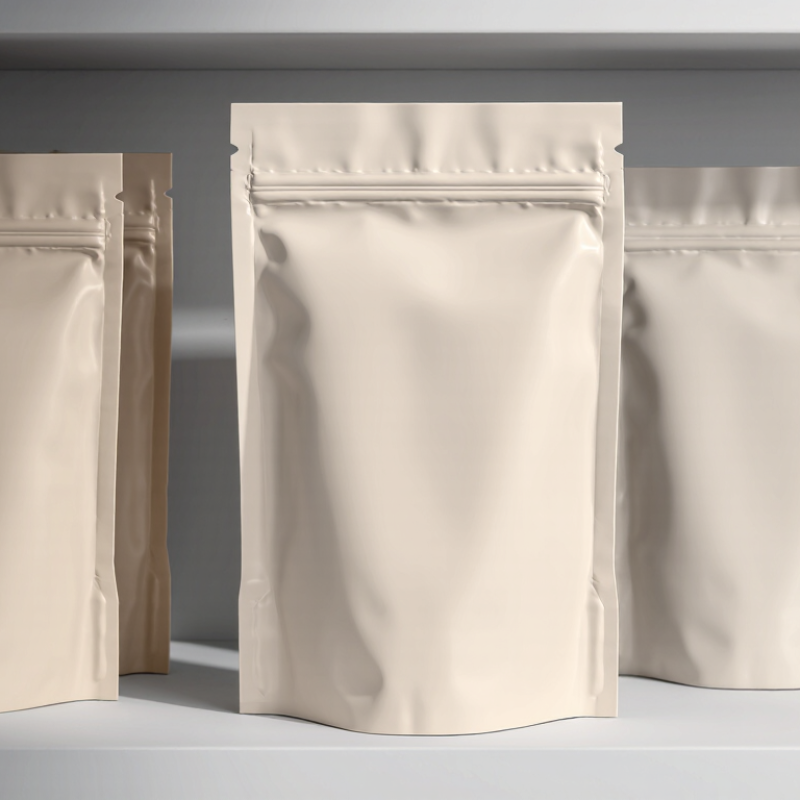
A Flat Bottom Pouch can turn a crowded shelf into a clearer product story. Its broad base helps it stand upright, while the front and side panels provide room for branding, product details, and practical instructions. On a shop shelf, that stable shape can make a pouch easier to face forward and easier for customers to notice. The exact result depends on the product, pouch dimensions, and filling process.
Packaging engineer Maya Chen is a fictional expert voice used here, not a source of a verified quotation. Her illustrative design principle is: “A pouch should earn its space through stability, clear information, and a finish that suits the product.” It is a useful test, not a guarantee. A pouch that looks elegant in a mock-up may behave differently when filled, transported, or opened at home.
Material choice matters. So do seals, zipper performance, barrier needs, and how the package will be packed and displayed. A matte surface may feel refined; a glossy one can make colors stand out. Neither is automatically better. Ask suppliers for samples, test them with the actual product, and check how the pouch stands after filling. Small details show up quickly.
This guide explores why brands choose flat-bottom packaging, what trade-offs to consider, and which questions to ask before ordering. Because the best format is not always the most attractive one. It is the one that works in real use.
How Flat-Bottom Pouches Fit the $42.9B U.S. Flexible Packaging Market (FPA, 2022)
The FPA reported a $42.9 billion U.S. flexible packaging market in 2022. That figure shows the scale of a category built around adaptable formats, not a guarantee that every pouch will sell better. Flat-bottom pouches occupy a practical niche: their broad base lets them stand upright, while side panels create room for product information. On a retail shelf, that can mean fewer leaning packs and a clearer front panel. Small details count.
For dry goods, powders, snacks, and other compatible products, the format can balance shelf presence with flexible-packaging efficiency. But the result depends on the product, barrier needs, fill weight, and sealing process. A pouch that looks stable when empty may behave differently once filled. Testing matters. Teams should check seal integrity, drop performance, and how easily the pack opens and pours. The base also uses material, so a neat display alone does not prove lower environmental impact. It is easy to overvalue shelf neatness. Flat-bottom pouches are not a universal fix, and packaging choices deserve real-world trials before production decisions.
Why Choose a Flat Bottom Pouch for Packaging? — How Flat-Bottom Pouches Fit the $42.9B U.S. Flexible Packaging Market (FPA, 2022)
Market context and packaging characteristics. Product performance depends on the pouch structure, material selection, filling process, and intended use. | Dimension | Flat-Bottom Pouch Facts | Why It Matters |
| U.S. flexible packaging market | The Flexible Packaging Association reported an estimated U.S. flexible packaging industry value of $42.9 billion for 2022. | Flat-bottom pouches are one format within the broader flexible packaging category; the market figure is not specific to this pouch type. |
| Base and shelf display | A gusseted base is designed to let the filled pouch stand upright on a flat surface. | Upright presentation can make the package easier to arrange and display on shelves, subject to the pouch design and how it is filled. |
| Package structure | The format typically combines a flat base with gusseted sides and a front and back panel. | The panels provide surfaces for product information and graphics; usable space varies with pouch dimensions and construction. |
| Material options | Pouches may be made from flexible films or paper-based and multi-material structures, depending on the product and packaging requirements. | Barrier properties, durability, and end-of-life options depend on the specific material structure—not simply on the pouch shape. |
| Product protection | Barrier layers and closures can be selected to suit a product’s needs, where compatible with the pouch design. | Protection against moisture, oxygen, light, or leakage must be verified for the chosen structure and application. |
| Closures and access | Depending on the specification, a pouch may include features such as a zipper, tear notch, or pour spout. | Optional features can support opening, dispensing, or reclosing; they add design and material considerations. |
| Compared with a pillow pouch | A flat-bottom design has a formed base intended to stand; a typical pillow pouch is a simpler, non-gusseted pillow-shaped pack. | The formats serve different presentation and packaging needs. The better choice depends on the product, filling line, and shelf requirements. |
| Recyclability considerations | Recyclability is determined by the pouch’s materials, local collection and processing systems, and applicable program criteria. | A flexible pouch should not be described as recyclable without confirming the exact structure and relevant local guidance. |
Source: Flexible Packaging Association (FPA), 2022 U.S. flexible packaging industry estimate, as cited in the supplied title. The $42.9 billion figure refers to the overall U.S. flexible packaging industry, not flat-bottom pouches alone.
How Five-Panel Construction Creates a Stable Base and Shelf-Facing Area
A flat-bottom pouch is built from a front panel, a back panel, two side gussets, and a separate bottom panel. Together, these five surfaces form a squared base when the pouch is filled. The gussets open outward, while the bottom panel spreads beneath the contents. This gives the pack a wider footprint than a simple pillow pouch. On a counter, it can stand without a separate support. A useful detail. The base still depends on pouch dimensions, material stiffness, seal quality, and how evenly the product settles. Heavy or uneven contents may make it tilt.
The front panel also creates a broad shelf-facing area. It can keep key product details visible while the side folds stay near the edges. For shoppers, that means less twisting to read a label. For packers, the flat base can help during filling and display, though machine setup and film behavior still matter. Leave space around folds and seals; crowded graphics may bend out of view. The structure is practical, not perfect. A pouch can lean if its bottom gusset is poorly formed or the pack is overfilled. Check filled samples on an actual shelf, not just a drawing. Small changes in width or fill weight can affect its stance.
Why Choose a Flat-Bottom Pouch?
How five-panel construction creates a stable base and shelf-facing area
A typical flat-bottom pouch has five panels: a broad front panel for shelf-facing display, a rear panel, two side gussets, and a bottom panel that unfolds to form a flat base. Counts describe the pouch structure, not measured performance.
Which Barrier Metrics Matter: ASTM F1249 WVTR and F1927 OTR
A flat bottom pouch can stand neatly on a shelf, but its shape does not guarantee freshness. For moisture-sensitive products, ask for the film’s water vapor transmission rate, or WVTR. ASTM F1249 measures WVTR through plastic film using a modulated infrared sensor. Results are commonly reported in grams per square meter per day. Lower values indicate less water vapor passing through under the stated test conditions.
Oxygen can dull aromas, oxidize fats, and change color. ASTM F1927 measures oxygen transmission through barrier materials with a coulometric detector at controlled relative humidity. OTR is usually reported in cubic centimeters per square meter per day. For illustration, a WVTR of 0.5 g/m²·day describes measured transmission, not a universal “good” result. The right limit depends on product sensitivity, shelf life, and storage conditions. Small numbers matter.
Request the test temperature, humidity, film thickness, and conditioning details with every result. Humidity can affect some barrier layers, so an OTR result at low relative humidity may not represent a damp warehouse. ASTM F1249 and F1927 test material specimens, not every seal or finished pouch. Check seal integrity too; a tiny leak can outweigh an impressive film reading. This is easy to miss. A useful specification names both WVTR and OTR targets, test conditions, and the finished package’s intended shelf life.
Sources: ASTM International, F1249 and F1927 test methods.
What FPA’s 21% U.S. Packaging-Market Share Says About Flexible Formats
FPA’s reported 21% share of the U.S. packaging market for flexible packaging signals meaningful adoption, not a universal fit. That distinction matters. A flat bottom pouch shows why: its gusseted base helps it stand on a shelf. Its wide panels make product details easier to see. The squared profile can look orderly in a crowded display. Before filling, it may take less storage space than rigid containers, depending on the shipping setup.
The market figure does not prove every product should switch. Coffee, grains, and snacks may need different barrier layers, closures, and sealing settings. Material choice should reflect moisture, oxygen, light, and handling needs, verified through packaging trials rather than appearance alone. One overlooked detail: a pouch that stands beautifully empty can slump when filled poorly. That trade-off is real. Multi-layer structures can also complicate end-of-life handling where suitable collection systems are unavailable. For buyers, the 21% figure is a reason to evaluate flexible formats, then test filled samples for shelf stability, seal strength, and everyday opening or pouring.
How to Match Pouch Capacity, Materials, Closures, and End-of-Life Options
A flat bottom pouch earns its extra structure only when the filled pack needs to stand, stack, and present clearly. Size it using the product’s actual density and fill behavior, not volume alone. A liter of granules and a liter of powder can settle very differently. Run fill trials, then check the seal area and shelf footprint. Leave practical headspace. Too much can make the pouch slump; too little can stress seals. The Flexible Packaging Association’s 2024 State of the Flexible Packaging Industry report estimated U.S. flexible packaging sales at $42.5 billion in 2023, a reminder that small specification choices operate at significant scale.
Match the laminate to real risks: moisture, oxygen, light, aroma loss, and handling. A high-barrier layer may protect sensitive contents, but can complicate recovery. For dry goods with modest barrier needs, ask converters about simpler, compatible material structures. Choose a zipper for repeated access, or a tear notch when opening once is enough. Test both with the people who will use the pack. End-of-life claims need equal scrutiny. The OECD’s Global Plastics Outlook reported that only 9% of global plastic waste was recycled in 2019. That figure is not packaging-specific, but it cautions against assuming a pouch will be recycled everywhere. Check local collection rules and available sorting infrastructure. I would still verify the final structure with recyclers; material labels alone are not proof.