Why Are Powdered Beets Good for You?
Powdered Beets Benefits are often linked to dietary nitrates, plant pigments, and convenient nutrition. A scoop stirred into water turns deep red, but its effects depend on the product’s ingredients and processing. “Beet powder” is not one standardized formula. Nitrate levels can differ substantially between brands, crops, and batches.
Research offers a useful starting point, with an important limitation. A 2013 meta-analysis in The Journal of Nutrition pooled 16 trials of dietary nitrate and found an average systolic blood-pressure reduction of about 4.4 mmHg. The studies mainly examined nitrate-rich foods or drinks, not every commercial beet powder. That distinction matters. The European Food Safety Authority sets an acceptable daily intake for nitrate of 3.7 milligrams per kilogram of body weight per day, considering total dietary exposure. This is a safety benchmark, not a recommended beet-powder dose. The USDA FoodData Central database also illustrates why labels deserve attention: nutritional values depend on the food form, so figures for whole beets cannot simply be applied to concentrated powder.
Powdered beets may offer a practical way to add beet-derived compounds to smoothies, yogurt, or water. Some products also provide fiber, while others are strained or blended with sweeteners. Check serving size, ingredient list, and any stated nitrate content. Small details matter. People using blood-pressure medicines or managing health conditions should ask a healthcare professional before making concentrated beet products a daily habit. The evidence is promising, not conclusive—and a bright-red scoop is not a treatment.
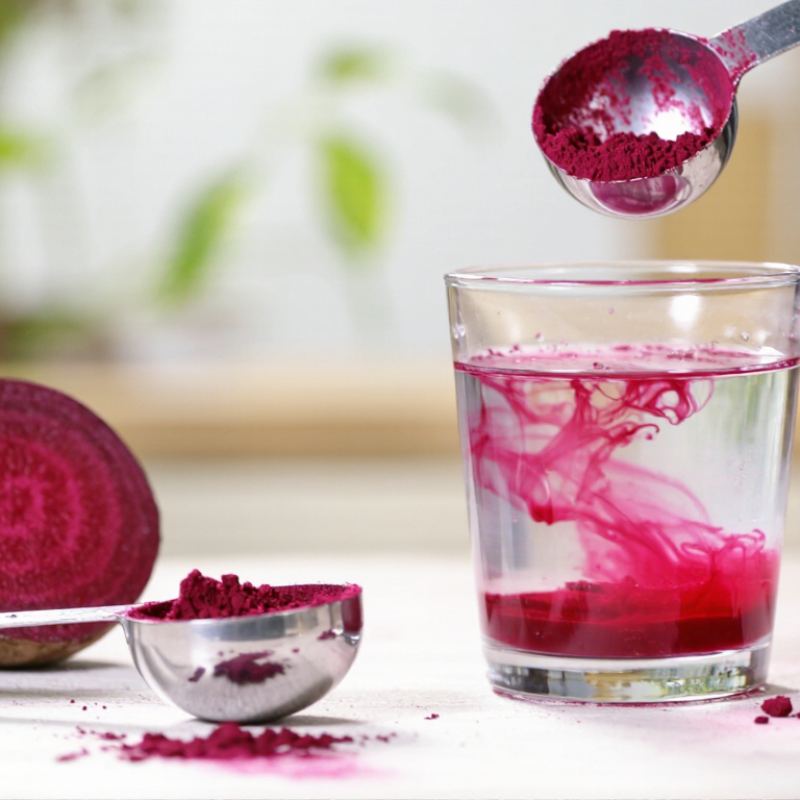
Composition and Processing: USDA Raw-Beet Benchmarks Include 43 kcal per 100 g
USDA FoodData Central lists raw beets at about 43 calories per 100 grams. That amount contains roughly 9.6 grams of carbohydrate, 2.8 grams of fiber, and 1.6 grams of protein. Fat is very low. These figures describe fresh, raw beetroot, not beet powder. That distinction matters.
Drying removes most of a beet’s water. As a result, 100 grams of powder represents much more original beet than the same weight of fresh root. Powder can therefore appear calorie-dense by weight, even when a usual spoonful provides modest calories. Compare serving sizes, not just per-100-gram figures. A small scoop can look almost weightless, but its nutrients are concentrated.
Beets also provide folate, potassium, and naturally occurring nitrate, although amounts vary with growing conditions and processing. Drying methods may affect some compounds, and color alone cannot show how much remains. The USDA raw-beet benchmark offers useful context, but it is not a substitute for a powder’s own nutrition panel. Honestly, it is an imperfect comparison. Check the ingredient list too, especially when a powder contains added ingredients.
Nitrate and Nitric Oxide: EFSA Sets an ADI of 3.7 mg/kg Body Weight
Powdered beets can supply dietary nitrate, which oral bacteria help convert into nitrite and then nitric oxide. Nitric oxide supports blood-vessel relaxation and normal circulation. The amount of nitrate in beet powder can vary with the crop, processing, and serving size. A bright red scoop does not reveal its nitrate dose.
EFSA’s 2008 scientific opinion sets an acceptable daily intake (ADI) for nitrate at 3.7 milligrams per kilogram of body weight per day. For a 70-kilogram adult, that equals 259 milligrams daily from all dietary sources—not a recommended beet-powder dose. The Joint FAO/WHO Expert Committee on Food Additives reports the same ADI.
These limits describe intake considered safe over a lifetime; they are not a sharp boundary between safe and harmful after one serving. Check whether a product provides measured nitrate content, and include vegetables, drinking water, and other foods in the wider picture. The label may not tell the whole story.
EFSA also notes that nitrate exposure from vegetables should be considered alongside their nutritional benefits. That balance matters, and personal intake estimates are imperfect.
Blood Pressure and Exercise: Trials Commonly Test 5–9 mmol of Nitrate
Powdered beets are useful when they provide a measured amount of dietary nitrate, not simply because the powder looks richly colored. In many blood-pressure and exercise trials, researchers test about 5–9 millimoles of nitrate, roughly 310–560 milligrams. That dose is not the same as a fixed weight of beet powder: nitrate levels can vary with growing conditions and processing. Check whether a product reports nitrate content, rather than relying on serving size alone.
The evidence is promising, but not perfectly tidy. A 2013 systematic review in The Journal of Nutrition found that inorganic nitrate and beetroot juice lowered systolic blood pressure by about 4 mmHg on average. Small changes matter differently for each person. Exercise studies often take nitrate a few hours before activity, yet performance benefits vary by exercise type and training level. Some people notice no difference. That is worth remembering. Powder may also mix unevenly; a red drink is not proof of a trial-matched dose. Anyone taking blood-pressure medication should ask a clinician before using concentrated nitrate supplements.
Why Are Powdered Beets Good for You? Nitrate Doses Studied for Blood Pressure and Exercise
Trials examining dietary nitrate and blood pressure or exercise commonly test doses in the range of 5–9 mmol. Since 1 mmol of nitrate is approximately 62 mg, this corresponds to about 310–558 mg. Nitrate content varies between beet powders, so these amounts should not be interpreted as a specific serving recommendation.
Betalains and Folate: Key Beet Compounds, with Levels Varying by Product
Powdered beets retain some of the compounds that give fresh beets their deep red color. Betalains are those pigments, and they also show antioxidant activity in laboratory research. Their amount in a powder, however, depends on the beet variety and how the product is processed. Drying temperature, exposure to air, and storage can all matter.
Color offers a clue, not a measurement. A vivid magenta scoop may contain betalains, but appearance alone cannot tell you how much. Products made from whole beets may also differ from concentrated extracts. Check the ingredient list and serving information, and look for independent testing when precise nutrient levels matter. Details can be easy to miss.
Beets also contribute folate, a B vitamin needed for normal cell function. Powder may provide some, but the amount varies by product and may decline during processing or storage. A nutrition panel is more useful than assuming every beet powder matches fresh beets. Keep the container sealed and dry; a damp spoon can invite clumps and shorten freshness. Even then, labels do not always reveal how much folate remains after opening. That uncertainty is worth acknowledging.
Safety and Label Reading: Compare Nitrate Content, Not Scoop Size Alone
Powdered beets can vary widely in nitrate concentration, so scoop weight alone tells you little. A five-gram serving may contain less nitrate than a smaller, concentrated serving. Check whether the label states nitrate in milligrams per serving, not just beetroot powder weight. Look for batch-specific testing when available. Labels can still be imperfect.
The Australian Institute of Sport’s supplement framework describes common sports-use doses around 5–9 mmol nitrate, or roughly 310–560 mg. That range is not a personal target. EFSA’s 2017 assessment set an acceptable daily intake of 3.7 mg per kilogram of body weight from all dietary sources. This is a long-term intake benchmark, not a direct measure of risk from one serving. Context matters.
Compare the listed nitrate amount with your other sources and the product’s serving directions. If nitrate is not quantified, you cannot reliably compare products by scoop size. Beet powders may also affect blood pressure; people using blood-pressure medicines should ask a clinician before regular use. A label may look precise, but the missing number matters.