
What Is the Best Dairy Milking Equipment from China?

Choosing the best dairy milking equipment from China takes more than comparing prices or polished factory photographs. The right system must suit herd size, barn layout, milking routine, and local service availability. A small family farm may need a reliable portable milker. A larger operation may benefit from a parlour with automated controls and clear performance records. The details matter: stainless-steel surfaces, pulsation consistency, vacuum stability, and components that operators can clean without awkward tools.

Dairy equipment specialist Dr. David Reid’s practical guidance can be paraphrased this way: “Good milking systems should support consistent milking, cow comfort, and milk quality.” This is a paraphrase, not a verified verbatim quotation. It points to a useful test. Ask suppliers for specifications, installation references, spare-parts plans, and training arrangements—not just a catalogue. Then check whether the proposed system fits your cows and workflow. A lower purchase price can become expensive if routine maintenance is difficult or parts arrive slowly.

Look closely. Request a live demonstration, and observe how the system starts, cleans, and handles a normal milking cycle. Confirm that measurements and performance claims are documented. Also ask who will troubleshoot the equipment after installation. A factory may build capable machines, but the best choice depends on support as much as hardware. No system is perfect. Even a well-matched setup needs trained operators, regular checks, and honest review when results fall short. These points provide a practical framework for comparing Chinese dairy milking equipment without treating one model as right for every farm.
What Is the Best Dairy Milking Equipment from China?

Define the Best System by Herd Size, Throughput, and ISO 5707 Performance

What Is the Best Dairy Milking Equipment from China?

The best system depends on herd size, peak-hour throughput, and verified performance—not the country of manufacture. A 60-cow herd with a short morning milking window may need more simultaneous capacity than a larger herd milked across longer shifts. Small herds differ.

Record cows milked per hour, average yield, shift length, and time spent washing before comparing parlors, pipelines, or robotic systems. USDA NASS reported about 9.4 million U.S. milk cows and 226 billion pounds of milk in 2023. Those national figures show industry scale, but they are not equipment-sizing targets.

Use ISO 5707:2007 to assess milking-installation construction and performance requirements, then specify installation testing against ISO 6690:2007. Ask for measured vacuum stability, pulsation performance, airflow capacity, and documented test conditions—not just a catalogue rating.

On site, watch clusters during peak flow and check whether milk lines, receiver capacity, and cleaning cycles match the planned workload. That matters. A spreadsheet can still mislead if it assumes every cow milks at the same pace.

Build in service access and modest capacity for growth, but avoid paying for unused throughput. Supplier claims should be checked against independent test records and a witnessed commissioning test.

Compare Chinese Bucket, Pipeline, Herringbone, and Rotary Milking Systems

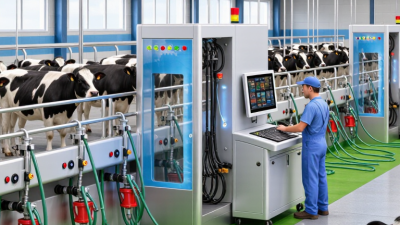
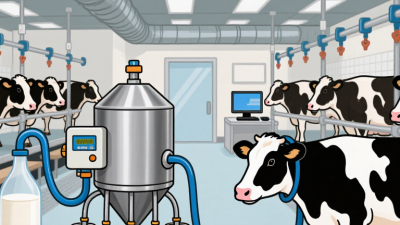
Chinese bucket milking systems suit small herds, mobile use, or farms with limited budgets. Each unit collects milk beside the cow, so installation is simple. Cleaning and carrying full buckets add daily labor, though. Pipeline systems move milk directly to a receiver, reducing manual handling and exposure to barn air. They fit growing herds, but require reliable vacuum control, careful pipe sizing, and regular maintenance.

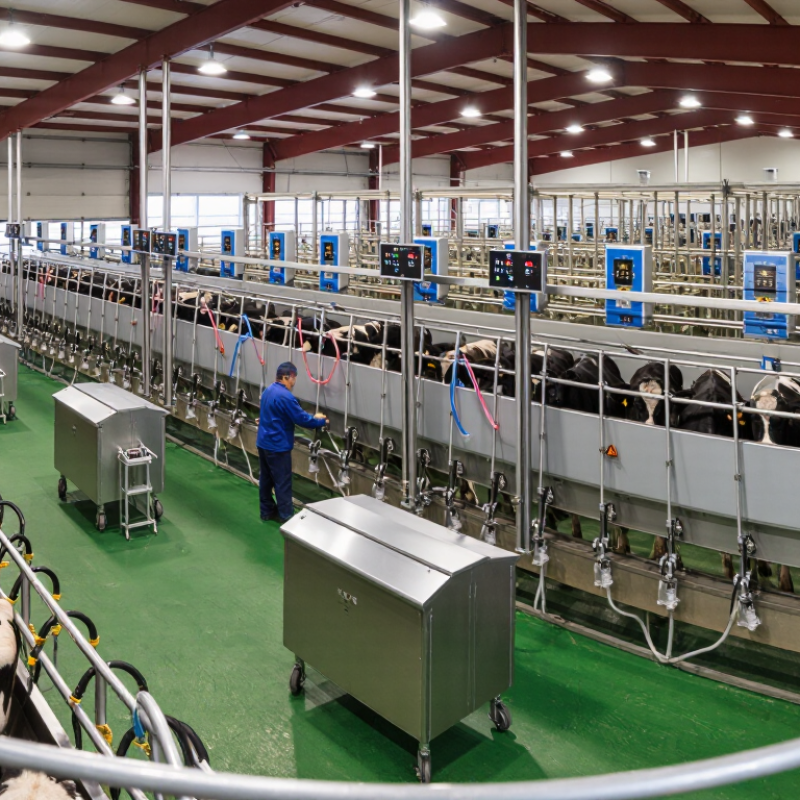
Herringbone parlors position cows at an angle, giving operators clear access to udders and a practical workflow for medium-sized herds. Rotary systems keep cows moving around a platform and can support high throughput, but need more space, capital, and skilled servicing. No layout wins everywhere.

FAO’s Statistical Yearbook 2023 reports roughly 930 million tonnes of global milk production in 2021, a reminder that dependable milking and cooling matter at scale. For a Chinese system, compare measured cows per hour, wash-cycle consistency, spare-part availability, and technician response—not just the quoted price.

A small detail can decide the result: a poorly placed pipeline bend may complicate cleaning. Buyers should request an on-farm trial where possible; brochure figures rarely capture uneven cow flow or local service delays.

Check Milking Benchmarks: 38–42 kPa Vacuum and 50–60 Pulses per Minute

What Is the Best Dairy Milking Equipment from China?

When comparing Chinese milking equipment, check operating performance, not just the catalogue’s rated vacuum. A practical benchmark is 38–42 kPa at the teat-end area during milking, with pulsation running at 50–60 cycles per minute. The National Mastitis Council’s milking-machine guidance discusses these operating ranges, while ISO 5707:2007 sets out requirements for milking-machine construction and performance. They are reference points, not a universal setting for every herd or installation. Small details matter.

Ask how the supplier verifies readings under working conditions. Vacuum measured at a pump or empty pipeline may differ from the level at the claw when milk is flowing. Request a test record showing the measurement location, pulsation rate, and pulsation ratio; ISO 6690 describes methods for testing milking installations. Then have a qualified technician check the system after installation. Leaks, long milk lines, and poorly maintained regulators can affect performance. A display that looks right may still hide uneven pulsation. That part is easy to overlook. Adjust settings to the equipment design, cow response, and local technician’s measurements, rather than forcing every farm to match one number.

Assess Equipment Testing Against ISO 5707 and ISO 6690

Choosing milking equipment from China should begin with test evidence, not catalogue claims. ISO 5707 sets requirements for milking-machine design and performance; ISO 6690 provides methods for mechanical testing. Ask for dated test records covering vacuum stability, pulsation, air leakage, and milkline performance. Check that the tested configuration matches the equipment you will receive. A passing result matters only when the measurements are traceable.

The FAO Statistical Yearbook 2024 reports global milk production of about 944 million tonnes in 2022. That scale makes reliable milking systems important, but production figures alone cannot prove machine quality. Request test conditions, instrument calibration details, and results from each operating point. If possible, witness a test with the intended cluster, pipeline, and controller. A certificate is useful. It is not the whole story. A factory test may not reveal installation problems on a farm, and that limitation deserves attention.

Tips: Compare the supplier’s ISO 6690 test report with an independent on-site test after installation. Record vacuum and pulsation readings under load, then repeat them after routine cleaning. Keep the raw data, not just the pass statement. Small leaks can matter. Sources: ISO 5707:2007; ISO 6690:2007; FAO Statistical Yearbook 2024.

What Is the Best Dairy Milking Equipment from China?

Assess equipment through testing against ISO 5707 and ISO 6690—not by origin or marketing claims.

The chart shows the publication years of the standards’ current editions, not equipment test results. ISO 5707:2022 addresses milking machine installation construction and performance; ISO 6690:2007 specifies mechanical tests. Compare suppliers by testing the actual installation against the applicable requirements and recording the results.

Compare Automation, After-Sales Service, and Total Lifecycle Cost

What Is the Best Dairy Milking Equipment from China?

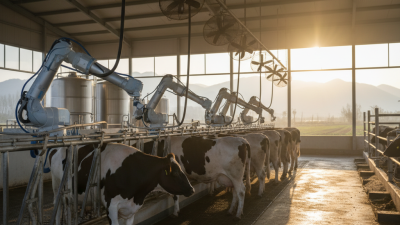
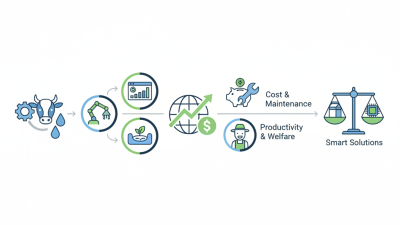
The best dairy milking equipment depends on herd size, barn layout, and available labor. A rotary system may suit a large, steady herd, while a parlour with simpler controls can be easier to maintain on a smaller farm. Compare automatic cluster removal, milk monitoring, and cleaning cycles against your daily workflow. Ask suppliers for operating specifications and references from farms with similar conditions. A feature list alone is not proof of performance.

After-sales support can shape the real cost of ownership. Confirm which spare parts are stocked locally, how technicians respond to faults, and whether training is included. A delayed sensor or vacuum-pump repair can disrupt milking schedules. Request a written maintenance plan and clarify warranty exclusions before comparing offers. Calculate total lifecycle cost, including installation, energy, water, routine parts, labor, and likely upgrades. The lowest purchase price may not stay low. I would still leave room for uncertainty: actual service needs vary with water quality, usage, and operator habits.

Tips: Ask for a parts list with prices and lead times. Check cleaning records and service logs during a reference visit. Test the controls with staff who will use them daily. Don’t skip the basics. A simpler system with dependable support may fit better than automation your team cannot confidently maintain.