
Choosing dairy equipment is not a matter of buying the newest machine. It is about matching the system to your herd, staff, building, and daily routine. A milking parlor that works well for 80 cows may create delays on a 300-cow farm. Even a well-built pump can become a poor choice if parts are hard to source or cleaning takes too long.
Dairy systems engineer Dr. Robert Reinemann’s work points to a practical principle: “Choose milking equipment to fit the cows, the farm, and the work that happens every day.” This is a concise paraphrase, not a verbatim quotation. It captures an important decision: compare equipment by its real operating demands, not only its purchase price. Consider milking capacity, milk cooling, wash systems, energy use, maintenance access, and compatibility with your existing setup. Picture the actual routine: a worker checking a vacuum line, a wash cycle running after milking, and milk moving into a cooling tank. Small details matter.
The right dairy equipment should support animal comfort and consistent work while leaving room for future changes. Ask suppliers for clear specifications, service arrangements, and references from farms with similar conditions. Walk through the equipment layout before committing. Look for pinch points, awkward hose routes, or controls that are difficult to reach. No system is perfect. I would also question assumptions about herd growth; forecasts can change, and oversizing equipment has costs of its own. This guide explores the key choices, trade-offs, and practical checks that can help you select equipment with greater confidence.
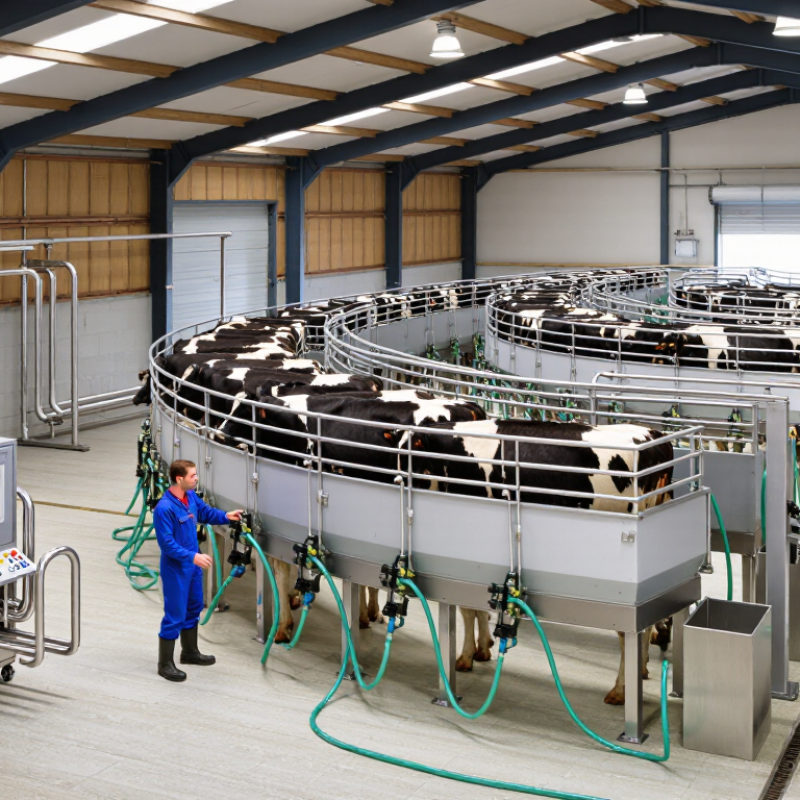
Choosing dairy equipment begins with the work your farm needs to do each day. Count milking cows, estimate herd growth, and record peak milk volumes—not just annual averages. USDA NASS reported average U.S. milk production of about 24,117 pounds per cow in 2023. That figure is useful context, not a design target; breed, feed, lactation stage, and management all affect output. Measure twice.
Match equipment capacity to your milking schedule and available labor. A larger parlor may shorten milking time, but it can add cleaning, maintenance, and utility demands. Check whether the milk tank can handle peak pickups, and whether wash water, electrical service, and the barn layout support the system. A spreadsheet can miss awkward hose runs or bottlenecks around the holding area. Walk the route during a busy milking.
Tips: List current and projected cow numbers, daily milk volume, and preferred milking hours before requesting quotes. Ask suppliers to show expected throughput and cleaning time using your herd figures. Leave room for growth, but challenge optimistic estimates; your expansion plan may change.
Choosing dairy equipment starts with matching each tool to a task, not buying the most automated option. Bucket systems collect milk in portable containers and can suit small herds, though carrying and washing them takes time. Pipeline systems move milk directly to a receiver, reducing handling but requiring compatible milking lines and careful cleaning. Parlors can support a steady routine for larger herds, but their layout and installation need planning.
A plate cooler pre-cools milk, while a bulk tank chills and stores it. Tank capacity should match daily yield and pickup timing, not just today’s average. Cooling matters. Filters catch visible debris; vacuum pumps and milk lines help maintain milking flow. Check hoses, seals, and vacuum levels regularly, since small faults can disrupt a whole milking session. A clean-in-place system circulates wash solution through equipment, but time, temperature, flow, and detergent concentration still need attention.
Feed mixers, waterers, and manure-handling equipment affect daily labor rather than milk transfer. Compare these by capacity, cleaning access, energy use, and ease of repair. Automation may save repeated steps, yet a complicated control panel can slow a small team when a fault appears. Maintenance access is easy to underestimate; leave room to reach pumps and valves without moving half the room.
Capacity should match peak milking flow, not just the herd’s total size. Record cow numbers, milking duration, wash cycles, and expected herd growth before comparing parlour layouts or pumps. A system that runs constantly leaves little time for cleaning and maintenance. Check whether the receiver, milk line, and cooling tank can handle the busiest session without bottlenecks. The National Mastitis Council’s guidance treats a bulk-tank standard plate count below 10,000 CFU/mL as a useful quality target; equipment that is difficult to rinse can make that target harder to maintain. Cleanability matters.
Hygiene is practical, not cosmetic. Look for smooth surfaces, accessible joints, effective drainage, and a wash system that reaches every milk-contact area. DairyNZ’s cow-comfort guidance indicates that cows commonly need about 10–12 hours of lying time each day. Crowded holding areas, slippery floors, or slow milking routines can cut into that rest. Give cows room to enter and leave calmly, and check stall dimensions against the animals actually in your herd. A tape measure helps; watching cows use the space helps more. I would not trust a perfect equipment plan on paper alone. Observe a full milking, note where cows hesitate, and revisit the layout after installation.
A milking system’s quoted price rarely shows its full cost. Compare options over their expected service life, then divide the total by annual milk volume or cow places. Include installation, electrical upgrades, cooling capacity, financing, and downtime during changeover. USDA ERS’s Milk Cost of Production estimates track expenses such as capital recovery and repairs per hundredweight. Use that framework to test whether a proposed upgrade fits your farm’s cost structure, not as a guaranteed saving.
Operating costs can hide in plain sight. Record monthly electricity, water, detergent, labor, and replacement-part use before buying. USDA’s 2022 Census of Agriculture counted 24,082 U.S. dairy farms, reflecting a sector with very different farm scales. A national average cannot predict your bill. Ask suppliers for energy and service estimates at your expected herd size, then check them against your own utility invoices. Small details matter: a wash cycle that runs longer each day adds up.
For maintenance, price routine inspections, liners, pumps, seals, and emergency callouts separately. Keep a reserve for parts and unexpected repairs; a stopped vacuum pump can interrupt milking immediately. Compare service intervals and parts availability, not just warranty length. My estimate would still be imperfect: labor time and breakdown risk are hard to predict. Track them for a year, and revise the calculation with actual farm records.
| Equipment | Typical planning capacity | Estimated purchase cost (USD) | Estimated annual operating cost (USD) | Estimated annual maintenance cost (USD) | Typical service life | What to consider when choosing |
|---|---|---|---|---|---|---|
| Milking system | Parlor or pipeline system for approximately 60–120 milking cows | $80,000–$250,000 | $4,000–$12,000 | $3,000–$10,000 | 15–25 years | Match stall numbers and milking throughput to herd size, labor availability, expansion plans, and cleaning requirements. |
| Bulk milk cooling tank | Approximately 3,000–5,000 gallons for a 100-cow farm; verify against milk volume and pickup schedule | $25,000–$60,000 | $2,000–$6,000 | $800–$2,500 | 15–20 years | Check usable capacity, cooling performance, insulation, wash access, and compatibility with local milk collection requirements. |
| Milk refrigeration unit | Sized to cool the farm’s peak daily milk volume | $10,000–$30,000 | $4,000–$12,000 | $1,500–$4,000 | 10–15 years | Compare energy efficiency, climate suitability, service access, and compatibility with the tank. Costs are separate from the tank estimate. |
| Cleaning-in-place (CIP) system | Configured for the milking system, pipelines, and tank | $5,000–$20,000 | $1,000–$4,000 | $500–$1,500 | 10–15 years | Allow for hot water, detergent, rinse water, drainage, and the cleaning cycles required by equipment and milk-quality procedures. |
| Manure handling equipment | Scrapers, pumps, or a small handling system for a 100-cow facility | $15,000–$60,000 | $1,000–$5,000 | $1,000–$4,000 | 10–15 years | Choose based on barn layout, manure consistency, storage distance, winter conditions, and the farm’s nutrient-management plan. |
| Feed mixer wagon | Typically 8–16 cubic metres; final size depends on ration and feeding frequency | $25,000–$70,000 | $3,000–$9,000 | $2,000–$6,000 | 8–12 years | Check batch size, loading access, tractor requirements, mixing accuracy, and whether the machine can serve all groups efficiently. |
| Water pumps and livestock drinkers | Designed for peak herd demand and adequate flow at the busiest times | $2,000–$10,000 | $500–$2,000 | $200–$800 | 8–15 years | Prioritize reliable water supply, adequate trough access, freeze protection where needed, and easy cleaning. |
| Standby generator | Capacity determined by the starting and running loads of essential equipment | $8,000–$25,000 | $300–$1,500 | $400–$1,200 | 10–20 years | Have an electrician calculate the required load, including refrigeration, milking equipment, pumps, and safe transfer equipment. |
| Planning note: These are illustrative U.S.-dollar budgeting ranges for a typical 100-milking-cow operation, not supplier quotations. Actual prices vary with location, capacity, automation, new or used condition, installation, and site requirements. Annual operating estimates cover typical energy, fuel, water, or consumables where relevant; they exclude labor, feed, financing, taxes, and building costs. Maintenance estimates cover routine service and parts and exclude major replacements. Equipment categories may overlap or may not all be needed on every farm; obtain local quotes and compare total cost of ownership before purchasing. | ||||||
Choosing dairy equipment starts with an honest picture of daily work. Record herd size, peak milking periods, wash cycles, and the time staff spend moving animals or cleaning. A system that suits today’s average may struggle during seasonal peaks. Measure the milking area, doorways, drainage points, and routes for feed and animal movement. Measure twice.
Compare equipment by capacity, cleaning requirements, maintenance access, and compatibility with existing utilities. Ask suppliers or qualified installers to confirm power, water, ventilation, and floor-load needs before purchase. Request a site assessment, not just a product specification. A detail that looks minor on paper, such as a valve behind a fixed panel, can make routine servicing awkward. I may be overemphasizing access, but it is easy to overlook until repairs are needed.
Plan installation around the farm’s actual schedule. Set clear milestones for delivery, utility connections, testing, staff training, and sanitation checks. Keep a written record of settings and maintenance intervals. For future expansion, consider spare floor space, service capacity, and whether additional units can connect without rebuilding the whole system. Leave room. Still, buying far more capacity than the farm can use may waste money and energy; growth estimates deserve regular review as herd plans change.