

What Is Dairy Milking Equipment and How Does It Work?
Dairy milking equipment is the connected system that removes milk, carries it safely, and helps maintain a clean milking routine. It may include a vacuum pump, pulsators, teat cups, milk lines, a receiver, and cleaning controls. The exact setup varies. A small parlor and a large rotary system do not work in precisely the same way.
Here is the basic idea. A pump creates vacuum, while pulsators rhythmically change pressure inside the teat-cup liners. That alternating action helps extract milk while giving the teats periods of relief. Milk then travels through pipes to a receiver or cooling system. The sound is familiar: a steady pump hum, a soft rhythmic pulse, and milk moving through stainless-steel lines. Milking-equipment specialist Douglas Reinemann’s work can be summarized this way: “Good equipment supports milk removal; it does not replace careful cow handling.” This is a paraphrase, not a verified verbatim quotation.
Small details matter. Poorly fitted liners, inconsistent vacuum, or neglected cleaning can affect performance and hygiene. Operators therefore check equipment condition, monitor milking routines, and follow the manufacturer’s maintenance guidance. Still, no machine makes every milking routine perfect. Cows differ, equipment wears, and busy workdays can expose overlooked problems. That deserves honest attention. This guide explains what dairy milking equipment does, how its main parts work together, and what practical checks help keep the system functioning reliably. It also distinguishes general principles from setup-specific advice, since installation and maintenance needs depend on the farm and equipment.
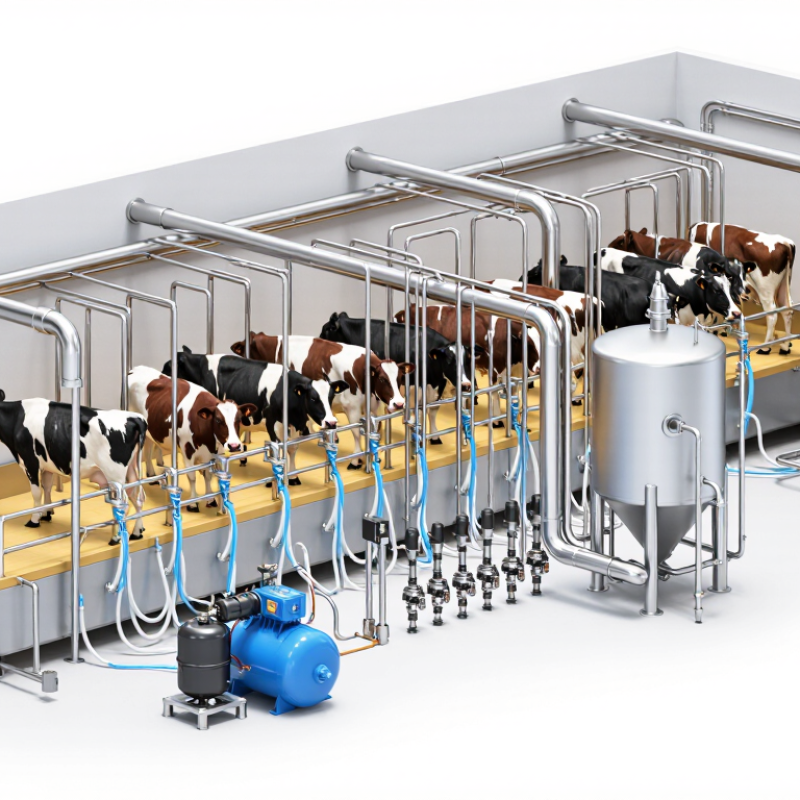
Table of Contents
[Hide]
What Dairy Milking Equipment Is and What It Is Used For
Dairy milking equipment is the set of machines and utensils used to collect milk from cows hygienically and consistently. A typical system includes teat cups with flexible liners, milk tubes, a vacuum pump, a pulsator, a receiver, and a cooled storage tank. The vacuum draws milk from the teat; timed changes in pressure let the liners gently compress and release. Milk then travels through closed pipes toward filtration and cooling. Clean-in-place washing equipment helps remove milk residues between sessions. It matters: USDA’s Milk Production 2023 Summary reported 226.3 billion pounds of milk produced on U.S. farms that year. At that scale, reliable collection and cooling are essential.
The equipment is used to milk animals, move milk away from the stall, measure output, and keep the product cool before pickup. Some systems serve a few cows at a time; larger parlors connect many milking points to shared pipelines and controls. Sensors may record yield or flag unusual flow, giving farm staff useful clues—not a diagnosis. The setup is not a magic fix. Poorly fitted liners, worn parts, or rushed cleaning can undermine performance, so routine inspection and careful operator training matter. Teat comfort matters too. The International Organization for Standardization’s ISO 5707 standard addresses the construction and performance of milking machines, including vacuum and pulsation requirements. Real farms still vary, and equipment settings need to suit the herd rather than follow a guess.
| Equipment or Stage | What It Is | How It Works | What It Is Used For |
|---|---|---|---|
| Vacuum pump and regulator | A pump and control system that create and maintain vacuum in the milking system. | The pump removes air from the system. A regulator admits air as needed to help keep vacuum within the system’s designed operating range. | Provides the vacuum needed to operate teat cups and move milk through the system. Correct setup and maintenance help support consistent milking. |
| Pulsator | A device that alternates the vacuum around the teat cups between milking and rest phases. | It changes the pressure in the space between the teat cup shell and liner. The liner opens and closes in a repeating cycle. | Helps milk flow during the milking phase and allows the teat to rest during the massage phase. |
| Teat cups and liners | Teat cups are the units placed on the cow’s teats. Each cup contains a flexible liner, also called a teat-cup rubber. | Vacuum draws milk from the teat when the liner is open. During the rest phase, the liner closes around the teat as the pressure changes. | Form the connection between the cow and the milking system and help extract milk through alternating phases. |
| Milking cluster | The assembled set of teat cups, a claw, and connecting tubes attached to a cow during milking. | The cups attach to the teats, while the claw collects milk from the individual cups and channels it into the milk tube. | Allows the cow’s teats to be milked together and directs milk away from the udder. |
| Milk tubes and pipeline | Food-contact tubing and pipes that carry milk from the milking cluster toward a receiver or collection vessel. | Milk travels through the system under the pressure and vacuum conditions designed for the particular installation. | Transfers milk from the cow to the milk-handling and cooling equipment while limiting exposure to the environment in a closed system. |
| Milk receiver and transfer pump | A vessel that temporarily collects milk from a pipeline, together with a pump that moves it onward. | Milk entering the receiver is transferred by the pump to a bulk tank or other storage system. The receiver separates milk from the system’s vacuum side. | Moves collected milk to storage while helping keep milk and the milking vacuum system appropriately separated. |
| Bulk milk cooling tank | An insulated, refrigerated tank used to store milk on the farm before collection. | A cooling system removes heat from the milk, and an agitator may mix it to promote even cooling. | Rapidly cools and stores milk to help preserve its quality until it is collected. Required temperature limits depend on applicable regulations and farm procedures. |
| Wash and sanitation system | Equipment and procedures used to clean milk-contact surfaces, including pipelines, clusters, and receivers. | Cleaning cycles circulate water and appropriate cleaning solutions through milk-contact parts; sanitation is carried out according to the system and food-safety procedures. | Removes milk residues and helps reduce microbial contamination between milking sessions. Cleaning does not replace routine inspection or maintenance. |
| How a typical milking cycle works | A coordinated sequence that connects cow preparation, milking, milk transfer, and equipment cleaning. | The teats are prepared and the cluster is attached. Pulsation alternates liner movement while milk flows through the claw and pipeline to cooling. The cluster is removed when milking is complete, and milk-contact equipment is cleaned. | Provides a repeatable process for collecting milk while supporting udder health, milk handling, and equipment hygiene. |
Related Posts
-
7 Tips for Choosing Dairy Milking Equipment
-
What Is the Best Dairy Milking Equipment from China?
-
2025 Top Milking Equipment Innovations for Modern Dairy Farming
-
Top 10 Essential Milking Parlour Equipment for Optimal Dairy Farm Efficiency
-
How to Choose the Right Milking Parlour Equipment for Your Dairy Farm?
-
Exploring China Top Milking Equipment for Modern Dairy Farming?