China Top 10 Cow Milking Equipment Manufacturers?
Choosing a supplier for cow milking equipment is not just a price comparison. A milking parlour may look impressive in a catalogue, yet daily performance depends on fit, maintenance, and operator training. For farms in China and overseas, the right manufacturer should offer equipment suited to herd size, housing, and milking routines. Small details matter. Hose length, liner replacement intervals, wash cycles, and the clarity of control panels all affect everyday work.
This guide introduces ten Chinese manufacturers and explains what buyers can examine before requesting a quotation. It considers product ranges, engineering experience, production capabilities, quality documentation, customization, and after-sales support. These points help readers form better questions; they do not replace independent checks. Ask for current specifications, installation references, spare-parts terms, and a demonstration using a comparable setup. Where possible, speak with existing customers and confirm that the quoted configuration matches the farm’s actual needs.
A ranked list can be useful, but it is never the whole story. Company information changes, and a strong factory may still be a poor fit for one particular farm. That deserves a second look. Buyers should compare operating costs and service access alongside purchase price, then verify claims directly with each supplier. This practical approach makes the shortlist more dependable, even if no guide can remove every uncertainty.
Understanding China’s Cow Milking Equipment Industry
China’s cow-milking equipment industry serves farms with very different herd sizes, labor conditions, and facility layouts. The National Bureau of Statistics reported that China produced 40.79 million tonnes of milk in 2024, down 2.8% from the previous year. That figure signals a large sector, but it does not translate directly into equipment demand: farm investment also depends on herd productivity, milk prices, and access to skilled technicians.
On a working farm, equipment must fit the daily routine. A milking parlor’s layout affects cow movement, while liners, vacuum settings, and wash cycles influence comfort and hygiene. Automated systems can reduce repetitive labor, but they need dependable maintenance and staff who can interpret alerts. Small details matter. A delayed service visit can disrupt more than one milking shift.
USDA Foreign Agricultural Service’s China Dairy and Products Annual reports offer useful context on production and market conditions, though forecasts and official output statistics may use different assumptions. Buyers should compare capacity, cleaning requirements, spare-part availability, and service response—not just headline automation features. A machine can look efficient in a brochure. The harder question is whether it works reliably through a humid summer, a busy calving period, and ordinary wear. Data helps, but farm-level inspection still matters.
Criteria for Evaluating Milking Equipment Manufacturers
Evaluating a milking-equipment manufacturer requires more than comparing catalogue prices. Check rated throughput against your herd size, milking routine, and expected expansion. Ask for measured vacuum stability, pulsation performance, and cleaning results under a full-load test. Small details matter. A receiver jar that is awkward to inspect can slow daily cleaning.
The FAO report Dairy Market Review 2023 estimates global milk production reached 944 million tonnes in 2022. That scale makes reliable uptime and consistent hygiene important, but it does not prove any supplier’s equipment will suit a particular farm. Request test records aligned with ISO 5707 for milking installations and ISO 6690 for mechanical testing. Look for clear data on energy use, water consumption, spare-part lead times, and service response—not broad promises.
Assess the complete installation, too: pipeline layout, cooling-tank coordination, operator training, and access to replacement components. Ask manufacturers for references from farms with similar herd sizes and housing conditions. Check what warranty exclusions apply and who handles commissioning. A neat brochure is not proof. No scorecard is perfect; local layouts and staff routines can distort comparisons, so leave room for an on-site trial before making a final assessment.
China Cow Milking Equipment Manufacturers: Evaluation Criteria
This illustrative 100-point rubric prioritizes milking performance and hygiene, alongside durability, automation, service support, and compliance documentation. It is a procurement template—not a market survey or a ranking of manufacturers. Buyers can verify equipment requirements against relevant standards, including ISO 5707 and ISO 6690.
Profiles of China’s Top 10 Cow Milking Equipment Manufacturers
China’s top-ten cow-milking-equipment manufacturers are best profiled by engineering capability, not promotional rankings. The National Bureau of Statistics of China reported milk output of 41.97 million tonnes in 2023, falling to 40.79 million tonnes in 2024. That shift matters. Buyers need systems suited to herd size, labor availability, and actual expansion plans.
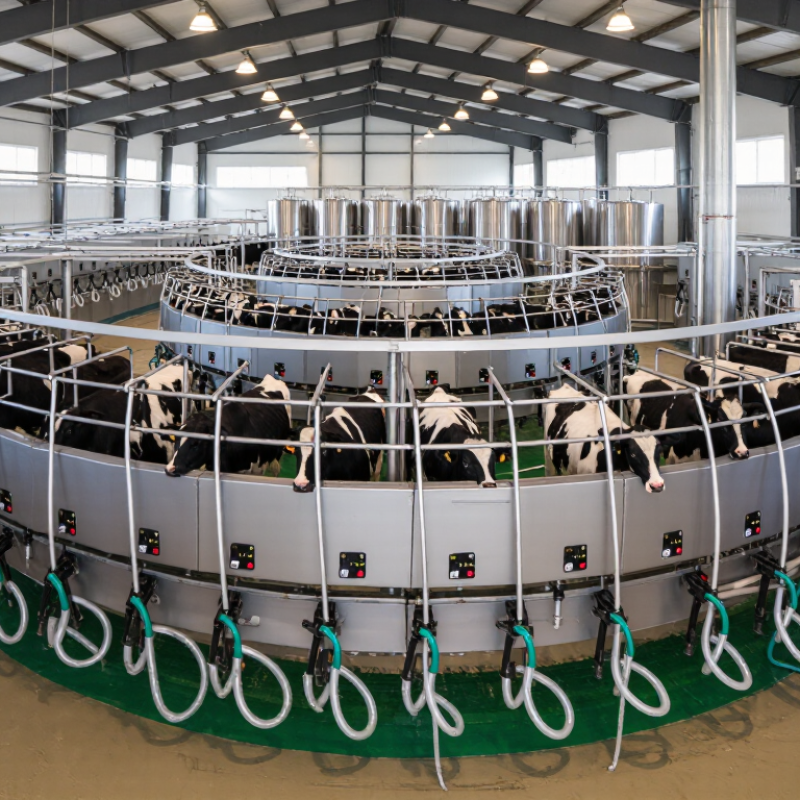
A useful supplier profile covers rotary parlors for large herds, herringbone systems for steady throughput, and pipeline units for smaller barns. Other manufacturers focus on milking clusters, vacuum controls, pulsation systems, cooling tanks, or automated cleaning. Some combine several components into complete milking lines. Look closely at stainless-steel welds, accessible filters, and how quickly technicians can replace a worn liner. Small details affect daily downtime.
Compare installation support, spare-parts availability, and documented performance alongside rated capacity. Ask for references from farms with similar herd sizes, and check service response times in writing. A supplier’s catalogue cannot prove consistent milk-flow performance. One weakness in many comparisons is the lack of independent, farm-level operating data. Request measurable results, such as milking time per cow and cleaning-cycle duration, before treating a “top ten” label as evidence.
Key Products and Technologies Offered by Leading Manufacturers
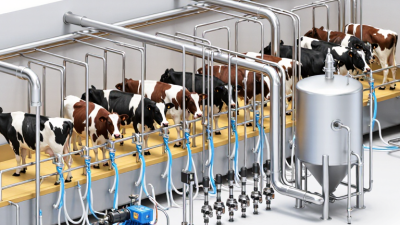
China’s leading cow milking equipment manufacturers offer systems for farms of different sizes, from conventional parlors to automated milking units. Key products include milking clusters, vacuum pumps, pulsators, milk meters, and bulk cooling tanks. Together, these components support consistent milk flow and help operators monitor daily production.
Technology choices matter. Variable-speed vacuum pumps can adjust output to demand, while electronic milk meters record yield and flag unusual changes. Automated systems may also track cow visits and milking activity through herd-management software. Cleaning-in-place programs help rinse pipelines and equipment between sessions, but staff still need to inspect seals, hoses, and wash temperatures. Small faults can affect performance. No system is maintenance-free.
Tips: Match equipment capacity to herd size and expected growth. Ask suppliers for service intervals, spare-part availability, and practical training. Measure the milking area before choosing a layout; a technically advanced unit may still be awkward to operate. Compare energy use and cleaning requirements, too. The best choice is not always the most automated one. A clear routine often matters as much as new features.
How to Compare and Select a Chinese Milking Equipment Supplier
A top-ten list is only a starting point. When comparing Chinese milking equipment suppliers, match each system to your herd size, barn layout, and daily milking schedule. Ask for clear specifications on vacuum stability, pulsation rate, liner materials, and cleaning cycles. These details affect teat comfort, milk quality, and routine maintenance. Small details matter.
Request a live demonstration using equipment similar to what you plan to buy. Watch how milk lines drain, how quickly the wash cycle runs, and whether operators can reach valves without awkward bending. Ask for installation drawings, a spare-parts list, and realistic delivery times. A polished brochure can still leave practical questions unanswered. Check references from farms with similar herd sizes, and ask what needed adjustment after installation.
Compare quotations line by line, not just by total price. Confirm what is included: pumps, fittings, commissioning, training, and after-sales support. Ask how remote troubleshooting works and which parts are commonly kept in stock. A factory video helps, but it cannot replace a detailed technical review. I would still leave room for doubt; supplier claims need independent checking, and no single checklist catches every issue. Keep records of promised specifications and test results before placing an order.