How to Choose the Best Milking Equipment?
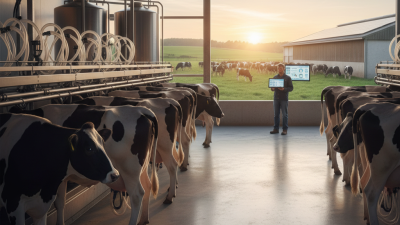
Choosing the best milking equipment is not about buying the largest system or the newest display. It is about matching technology to your herd, staff, parlour, and daily routine. A small family dairy may need simple, washable components, while a high-volume operation may require automated cluster removal, accurate milk meters, and dependable cooling capacity.
Dr. Jeffrey Bewley, a respected dairy systems specialist, offers a useful principle: “The best technology is the technology that improves consistency and reduces risk.” That idea matters in every milking area. Equipment should support gentle teat stimulation, stable vacuum levels, fast cleaning, and clear performance monitoring. It should also remain practical when a liner needs replacing at 5 a.m.
Look closely at the details.
Can your team identify a vacuum problem quickly? Are spare parts available locally? Does the wash system reach every milk-contact surface? A reliable milking equipment choice should answer these questions before installation, not after a costly breakdown. Check the manufacturer’s service record, training support, warranty terms, and maintenance requirements. Ask other farmers what failed after three years, not only what impressed them on delivery day.
There is no perfect system. I once viewed automation as the obvious upgrade, but labour skills, water quality, and barn layout can change the result. That is worth remembering. The best decision combines measured milk-flow data, animal comfort, operator experience, and honest budget planning. This guide will examine those factors and help you choose equipment that performs consistently, cleans thoroughly, and fits your farm’s real working conditions.
Understanding Milking Equipment Types and Their Core Functions
Choosing milking equipment starts with understanding its type, not comparing price tags.
Each system solves a different workflow problem.
A bucket milker suits small herds and occasional milking. It uses a vacuum pump, teat cups, a short milk hose, and a collection pail. The operator can watch each animal closely, but carrying full buckets becomes tiring quickly. That practical weakness matters more than many brochures admit.
Pipeline systems move milk directly to a receiver or cooling tank. They reduce lifting and support steadier routines in medium-sized barns.
Parlor systems are built for group milking.
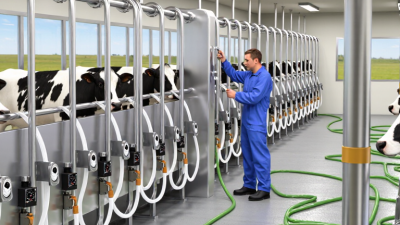
Side-by-side, herringbone, and rotary layouts differ in animal flow, operator access, and cleaning time. Robotic systems milk cows individually, using sensors to identify animals and monitor milking activity. Their convenience depends on reliable training, maintenance, and animal traffic.
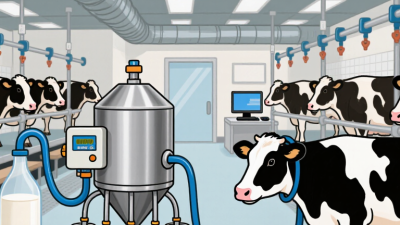
Core functions remain similar across all types:
- controlled vacuum
- regular pulsation
- gentle milk transfer
- rapid cooling
- thorough cleaning
Pulsation is especially important. It alternates suction and rest, helping protect teat condition during milking.
Look beyond capacity claims.
Check vacuum stability at the teat, liner condition, hose length, and wash-water temperature. Small details matter.
In my experience, an oversized system can waste energy and complicate cleaning. A compact unit may work better, even if it appears less impressive.
Ask how quickly faults can be detected and repaired. Record cooling time, milking duration, and repeated animal behavior. These observations often reveal problems that a sales specification misses.
A thoughtful choice balances herd size, labor skills, barn layout, hygiene routines, and future changes.
Assessing Herd Size, Farm Layout, and Milking Requirements
Choosing milking equipment starts with the herd, not the catalogue. USDA’s 2022 Census counted 9.36 million milk cows across 26,290 U.S. farms. That equals roughly 356 cows per farm. However, averages can mislead. A 70-cow herd may suit a compact herringbone parlour. A 700-cow herd needs faster throughput and stronger backup planning. Count cows milked during the busiest hour, not only total animals. Peak demand decides real capacity.
Farm layout can quietly reduce performance. Measure the distance from housing to the collecting yard, including slopes, waiting space, drainage, water, and electrical access. Cows should enter calmly and leave without crossing feed traffic. DairyNZ’s 2023–24 Economic Survey reports an average New Zealand herd of roughly 450 cows, highlighting the need for scalable layouts. A rotary system may support continuous movement. Yet it can waste capital on a compact farm. A poorly placed parlour can add minutes to every milking. Those minutes become labour.
Milking requirements need equal attention. Record milking frequency, expected peak flow, labour availability, wash-water volume, and udder-health targets. Sensors may help, but only when staff interpret them consistently. I would not choose equipment from cow numbers alone. A first layout estimate can be too optimistic after measuring foot traffic and cleaning time. Ask for verified throughput, service access, and a realistic emergency plan. The right system should meet current routines without preventing practical expansion.
Comparing Equipment Features, Capacity, and Milking Efficiency
Choosing milking equipment starts with measurable output, not shiny features. Compare cow flow, cluster count, vacuum stability, cleaning cycles, and operator access. A 2022 USDA Census of Agriculture report recorded about 9.36 million milk cows in the United States. That scale shows why capacity must match herd size and labor availability. A system designed for 300 cows may waste energy on a 70-cow farm.
Capacity should be measured as cows milked per hour, while efficiency includes attachment time, changeover, and downtime. Teagasc milking research commonly examines throughput, liner removal, and milking duration together. A faster parlor is not automatically better. Poor udder preparation or unstable vacuum can increase repeat work and stress. The 2023 National Milk Producers Federation sustainability report also links efficient dairy operations with lower resource use per unit of milk. These figures are useful, but farm conditions still vary. My own preference would be a slower, consistent system over impressive theoretical capacity.
Tips: Record actual milking time for two weeks. Count idle minutes. Check whether employees can reach every cow safely. Ask for independent service records, not only sales estimates. Compare energy and water use per milking cycle. Also test the cleaning routine during busy periods; it may look perfect during a demonstration, yet fail when staffing is short. Keep one uncomfortable question: are you buying capacity, or merely buying complexity?
Evaluating Hygiene, Animal Welfare, Maintenance, and Safety
How to Choose the Best Milking Equipment?
Hygiene should guide every equipment decision. Milk-contact surfaces must be smooth, accessible, and easy to clean. The Codex Code of Hygienic Practice for Milk recommends controlled cleaning, safe water, and strict time-temperature management. On a working dairy, a poorly positioned hose can leave residue behind. Small details matter. Look for clear cleaning cycles, verified water temperatures, and simple inspection points.
Animal welfare deserves equal attention. The USDA APHIS National Animal Health Monitoring System reported 25.9 clinical mastitis cases per 100 cows annually in its 2014 Dairy Study. Equipment cannot prevent every case, but stable vacuum levels and gentle liners can reduce teat stress. The 2023 EFSA welfare assessment identified mastitis, lameness, and restricted movement as major dairy-cow concerns. Cows should enter, milk, and exit without crowding or repeated slipping. A quiet system helps, although “quiet” does not automatically mean humane.
Maintenance and safety are practical tests, not brochure promises. ISO 5707 covers milking-machine performance, including vacuum and airflow, while ISO 6690 describes testing methods. Ask for measured results, service intervals, spare-part availability, and documented operator training. Check emergency shut-offs, electrical protection, non-slip flooring, and hose placement. A cheaper unit may cost more through downtime and contaminated milk. I would not ignore that possibility. Data from farms can also be imperfect, because recording habits differ. Review maintenance logs, observe one complete milking, and question any impressive claim that lacks a test record.
How to Choose the Best Milking Equipment?
Comparison of generic milking-system designs across hygiene, animal welfare, maintenance, and operator safety. Higher scores indicate stronger practical performance when equipment is correctly installed and managed.
Scores use a five-point evaluation scale. Hygiene depends on effective cleaning and sanitation, while maintenance performance depends on system complexity, service access, and preventive maintenance practices.
Calculating Costs, Long-Term Value, and Installation Support
Choosing milking equipment should begin with total cost, not the purchase price. Include the parlour, vacuum system, electrical work, drainage, cooling capacity, training, maintenance, and possible downtime. USDA ERS cost-and-returns data consistently identifies feed and labor as major dairy expenses. Equipment should therefore reduce labor pressure without creating expensive service demands.
Calculate the cost per milking session. Record operator hours, average throughput, cleaning time, energy use, and replacement parts. Then compare these figures with the expected service life. A lower-priced system may require more frequent component changes. Small errors compound. The International Organization for Standardization’s ISO 5707 guidance emphasizes measurable performance in vacuum systems, pipelines, and milking units. Ask suppliers for test results, commissioning records, and maintenance intervals that match this framework.
Installation support can protect long-term value. Require a site survey, utility assessment, staff training, and written response times before signing. The U.S. Department of Agriculture’s National Agricultural Statistics Service reported approximately 9.36 million milk cows in the United States during 2024, showing the scale of a demanding production environment. Yet larger capacity is not always better for a smaller farm. It may increase cleaning, energy, and repair costs. I would also challenge optimistic payback claims. Use your own labor records and milk collection schedule. Recheck the calculation after installation, because real cleaning times and workflow interruptions often differ from the original estimate.
How to Choose the Best Milking Equipment? - Calculating Costs, Long-Term Value, and Installation Support
| Equipment Type |
Typical Herd Size |
Typical Throughput |
Estimated Equipment Cost |
Installation Cost |
Expected Service Life |
Annualized Capital Cost |
Best Use Case |
Installation Support to Require |
| Portable Bucket Milker |
Up to 30 cows |
1–2 cows at a time |
US$2,000–8,000 |
US$500–2,000 |
5–10 years |
US$250–2,000/year |
Small herds, seasonal operations, and limited building modifications |
Vacuum testing, operator training, cleaning-procedure training, and spare-part guidance |
| Pipeline Milking System |
20–100 cows |
2–4 cows at a time |
US$15,000–45,000 |
US$5,000–15,000 |
10–15 years |
US$1,300–6,000/year |
Growing herds that need improved labor efficiency without constructing a full parlour |
Building layout review, pipeline slope verification, electrical inspection, commissioning, and staff training |
| Herringbone Parlour |
60–250 cows |
12–24 cows per batch |
US$50,000–150,000 |
US$20,000–60,000 |
15–20 years |
US$3,500–14,000/year |
Medium and large herds seeking a practical balance between capacity, visibility, and capital cost |
Civil-work drawings, cow-flow planning, vacuum-system commissioning, hygiene validation, and on-site training |
| Parallel Parlour |
100–400 cows |
16–40 cows per batch |
US$80,000–220,000 |
US$30,000–80,000 |
15–20 years |
US$5,500–20,000/year |
High-throughput operations with a rectangular building layout and a strong focus on rapid cow turnover |
Traffic-flow design, platform alignment, utility planning, commissioning, emergency procedures, and maintenance training |
| Rotary Parlour |
250–1,000+ cows |
24–80 cows per rotation |
US$250,000–750,000 |
US$100,000–300,000 |
15–25 years |
US$14,000–70,000/year |
Large herds where continuous cow flow and high labor productivity justify substantial investment |
Structural engineering, foundation inspection, automation integration, operator certification, and planned service coverage |
| Automated Milking System |
40–70 cows per unit |
Voluntary milking; typically 2–3 milkings per cow per day |
US$150,000–250,000 per unit |
US$40,000–120,000 |
10–15 years |
US$13,000–37,000/year per unit |
Farms prioritizing flexible labor scheduling, individual cow data, and voluntary milking behavior |
Cow-traffic design, data-system setup, network and power backup planning, staff training, and rapid technical support |
Cost assumptions: Figures are planning estimates in U.S. dollars for new equipment and may vary by region, building condition, herd size, automation level, electrical work, plumbing, civil construction, taxes, freight, and local labor rates. Annualized capital cost is calculated as the estimated equipment cost plus installation cost divided by the expected service life; financing, utilities, consumables, labor, repairs, and building costs are excluded.
Selection checklist: Compare total installed cost, expected cows milked per hour, labor requirements, energy and water use, replacement-part availability, preventive-maintenance intervals, training, warranty coverage, remote diagnostics, and the availability of qualified service technicians in your area.