
Buying dairy barn equipment is not simply a matter of choosing the newest products. Each item should suit the herd, barn layout, daily routine, and available maintenance support. A feed alley, for example, needs equipment that fits its width and supports consistent access to feed. Small details matter. A drinker’s location can affect access, while poorly maintained ventilation fans may fail to deliver steady airflow.
This guide introduces ten common dairy barn equipment types buyers may encounter, from stalls and fans to milking and manure-handling systems. It explains what each type does and which practical details deserve attention, including durability, cleaning access, installation needs, and service availability. Specifications alone rarely tell the whole story. Ask how equipment performs under your farm’s conditions, and compare supplier guidance with advice from qualified dairy professionals. Needs vary. A system that works well in one barn may be a poor fit in another, and no list can replace a site assessment. Some trade-offs are easy to miss during purchasing; I would revisit them before committing. Use these equipment categories as a starting point for careful comparisons, not as a universal prescription.
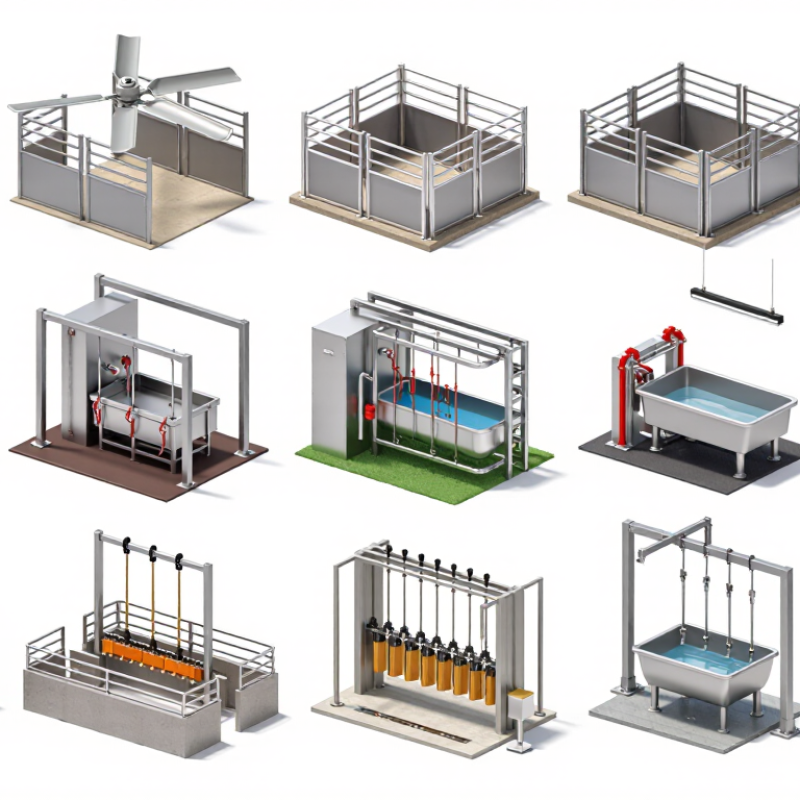
A modern dairy barn works as a connected system, not a collection of purchases. Stalls and grooved flooring support comfortable movement; ventilation fans help remove heat and moisture. Feed barriers, waterers, and handling areas shape daily routines. Milking equipment and bulk tanks manage milk collection and cooling, while manure systems keep alleys cleaner. Small design choices matter. A poorly placed waterer can create congestion, even when the barn has ample space.
Scale makes reliable equipment important. USDA’s National Agricultural Statistics Service reported about 226 billion pounds of U.S. milk production in 2023, from roughly 9.4 million milk cows. Those figures show the size of the sector, not a guaranteed payoff from new equipment. Buyers should assess cow flow, cleaning time, maintenance access, and local climate before comparing specifications. I would not assume that a more automated system is always better; its value depends on labor, training, and dependable service.
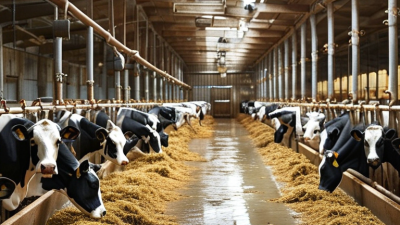
Housing and feeding equipment shape the cow’s routine, from the first step into a stall to the last mouthful at the feed bunk. DairyNZ’s cow-comfort guidance recommends allowing cows roughly 10–12 hours of lying time each day. Deep, dry bedding and correctly sized stalls help protect that rest. A wet patch or a narrow brisket board can change how a cow lies. Small details matter.
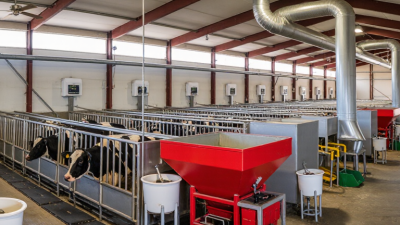
Feed barriers, troughs, and water points should let cows eat and drink without crowding. Penn State Extension guidance commonly uses about 24 inches of feed-bunk space per lactating cow, though group size and feeding patterns affect the practical requirement. The National Academies’ 2021 Nutrient Requirements of Dairy Cattle also stresses that diets must reflect factors such as milk production and stage of lactation. That makes accurate weighing and regular ration checks useful parts of daily equipment management, not optional extras.
Walk the barn during a busy feeding period. Look for cows displaced from the bunk, empty spaces in the feed line, or muddy traffic paths near water. These observations can reveal problems that a floor plan misses. Yet no single layout suits every herd; I would treat published dimensions as starting points, then reassess them as animals and routines change. A clean trough is good. Access matters more.
| Equipment type | Main function | Buyer considerations | Daily cow-care value |
|---|---|---|---|
| Freestalls and stall dividers | Provide individual resting spaces and help guide cows into a consistent lying position. | Match stall dimensions and divider layout to the size of the cows; check for smooth edges, secure fittings, and adequate lunge space. | Supports comfortable resting and helps keep cows’ lying areas organized. |
| Stall mattresses and bedding systems | Cushion the stall surface; bedding provides a dry, clean layer for resting. | Compare cushioning, surface grip, drainage, bedding compatibility, and the labor required for routine replenishment and cleaning. | Helps maintain clean, comfortable resting spaces when inspected and refreshed regularly. |
| Feed barriers and headlocks | Separate feeding positions and, in headlock designs, allow individual cows to be restrained for handling. | Check opening size, animal access, safe release, structural strength, and compatibility with the feed lane and herd. | Keeps feeding areas orderly and can make routine checks and treatments easier. |
| Feed bunks and manger surfaces | Provide a defined surface for presenting forage and mixed rations. | Choose a durable, cleanable surface and a layout that gives cows practical access while allowing efficient feed delivery and push-up. | Makes it easier to distribute feed consistently and remove leftover feed during cleaning. |
| Feed push-up equipment | Moves feed closer to the feed barrier between delivery times. | Consider lane width, turning space, operating schedule, feed disturbance, and safe separation from animals and workers. | Helps keep feed within reach so cows can access it throughout the day. |
| Water troughs and drinkers | Provide access to fresh drinking water in housing and feeding areas. | Assess drinking space, refill capacity, water flow, freeze protection where needed, drainage, and ease of cleaning. | Reliable access to clean water is an essential part of daily dairy-cow care. |
| Ventilation fans and air inlets | Support air movement and fresh-air exchange in the barn. | Plan equipment around barn layout, airflow paths, controls, maintenance access, and local climate conditions. | Helps manage heat and moisture; performance depends on correct placement and upkeep. |
| Manure scrapers and alley-cleaning systems | Remove manure from barn alleys and move it toward collection or storage areas. | Check alley dimensions, scraper paths, crossing points, safety controls, and compatibility with the manure-handling plan. | Supports cleaner walking surfaces and a more predictable barn-cleaning routine. |
| Grooming brushes | Allow cows to groom themselves using a rotating or fixed brush. | Look for a stable mounting point, safe operation, accessible placement, and straightforward cleaning and inspection. | Offers cows an opportunity for self-grooming as part of their housing environment. |
| Gates and sorting panels | Direct cow movement between housing, feeding, and handling areas. | Select sturdy, easy-to-operate gates with secure latches, suitable passage widths, and layouts that avoid sharp turns or bottlenecks. | Makes routine movement and separation more manageable for both cows and caretakers. |
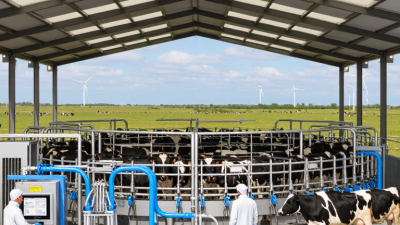
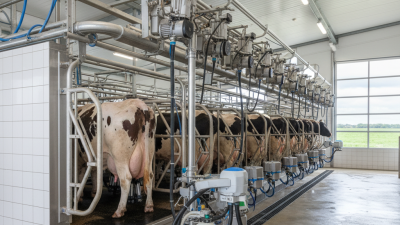
Reliable milking starts with equipment that suits herd size and daily routines. Milking units, vacuum pumps, pulsators, and teat cups work together to maintain a steady, comfortable milking cycle. Teat-preparation tools and milk meters support consistent handling and help staff spot changes in yield. Small details matter. Check hoses and liners regularly; worn parts can affect performance before damage is obvious.
Milk handling continues after the cluster comes off. A sanitary pipeline, receiver jar, milk pump, plate cooler, and bulk tank move and cool milk for storage. Clean-in-place systems help wash internal surfaces, but they still need correct settings and routine checks. Cooling performance depends on tank capacity, incoming milk volume, and room conditions. A system that looks efficient on paper may struggle during peak production. That deserves a second look.
Tips: Record cooling times and milk temperatures, and note unusual changes. Keep cleaning records clear and inspect seals, filters, and connections. Do not assume an automatic cycle cleaned every surface; verify it. A simple checklist can prevent missed steps, though it will not replace trained staff or equipment maintenance.
Health, manure, and climate-control equipment work as one system. Start with stall mats or deep-bedded stalls, clean waterers, cow brushes, and a footbath. Penn State Extension guidance places a lactating cow’s daily water intake at roughly 30–50 gallons, depending on conditions. Waterers need enough flow and space; a dirty trough can undo careful health management. Small details matter.
Manure handling choices include alley scrapers, flush channels, solid-liquid separators, and covered storage. USDA NRCS Conservation Practice Standard 313 provides design guidance for waste-storage facilities, including accounting for manure and wastewater volumes. Match capacity to herd size, wash water, and removal schedules. A separator is not a substitute for adequate storage. That distinction is easy to miss.
For climate control, consider exhaust fans, ventilation inlets or curtains, and low-pressure soakers. Zimbelman and colleagues proposed a temperature-humidity index threshold of 68 for heat stress in high-producing dairy cows. Use sensors at cow level, not only near the office. Fans and soakers can help, but poor air movement or wet bedding creates new problems. Equipment layouts also need seasonal review; what works in July may feel inadequate in a still, damp barn.
Buying dairy barn equipment starts with the herd and the building, not a catalog. Count cows by group, check stall dimensions, and map daily routes from the feed alley to the milking area. A scraper that fits one barn may block a narrow turn elsewhere. Measure twice.
Compare equipment by function, capacity, and upkeep. For stalls, check adjustability, edge finish, and bedding depth. For ventilation, consider airflow at cow level, fan spacing, and seasonal heat loads; a quiet fan is not automatically effective. Waterers should refill quickly and allow easy cleaning. Inspect service access on milking and manure systems. Ask for operating requirements, maintenance intervals, and utility needs in writing. Compare total ownership costs, including installation, energy, replacement parts, and downtime—not just the purchase price.
Walk the barn during a busy shift before deciding. Watch for bottlenecks, wet floors, awkward gates, and places workers must reach over animals. Ask the people who clean and service the equipment what slows them down. Their answers may be incomplete, and one visit cannot predict every season. Still, practical observations often reveal problems a specification sheet misses. Keep some budget for adjustments; existing layouts rarely behave exactly as planned.
Number of practical buyer-checklist prompts for each equipment type. These counts are not sales figures or market rankings.
Use the checklist to compare capacity, compatibility, cow comfort, hygiene, safety, energy use, and maintenance needs against your barn layout and operating goals.