

Best China Milking Parlour Equipment Manufacturers?
Choosing the best China milking parlour equipment manufacturers requires more than comparing prices or stainless-steel finishes.
The market is changing quickly. The International Dairy Federation’s World Dairy Situation 2024 highlights persistent pressure on dairy efficiency, labor availability, production costs, and animal welfare. The USDA’s China Dairy and Products Annual also describes a more cautious Chinese dairy sector, with producers reviewing herd size, margins, and technology investment. These conditions make reliable milking parlour equipment increasingly important.
Small details matter. A poorly aligned liner can leave uneven milk in the udder. Slow washing cycles can delay the next group. Slippery floors may discourage cows from entering calmly. These problems affect throughput, hygiene, worker comfort, and potentially somatic cell counts.
Temple Grandin’s well-known livestock-handling principle is useful here: “The equipment should work with the animal, not against it.” Her words are not a complete milking specification, but they offer a practical test. Does the parlour encourage steady cow flow? Can operators see teat preparation clearly? Are vacuum control, pulsation, cleaning, and spare parts support dependable?
No shortlist is perfect.
This guide examines leading China-based manufacturers through an E-E-A-T-focused lens. It considers manufacturing experience, engineering capability, certifications, installation records, after-sales service, and farm-level performance. Product brochures can look impressive. Real farms reveal more. Buyers should request verified references, maintenance procedures, test data, and transparent warranty terms before selecting a supplier.
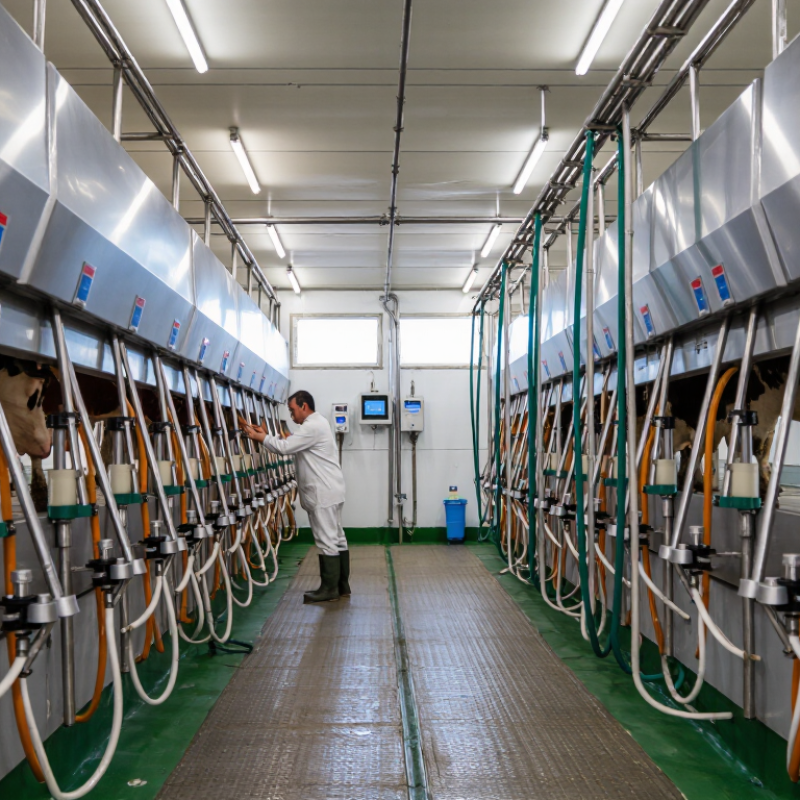
Table of Contents
[Hide]
Types of Milking Parlour Equipment Made in China
Chinese manufacturers produce several milking parlour equipment types for different herd sizes and barn layouts. Herringbone parlours place cows at an angle, allowing operators to reach udders from one side. They suit medium-sized farms and support orderly animal movement. Parallel parlours position cows shoulder to shoulder. This design uses space efficiently and can reduce operator walking distance. Tandem parlours keep cows in individual stalls, so each animal can enter and leave independently. That arrangement helps when milking speed varies across the herd.
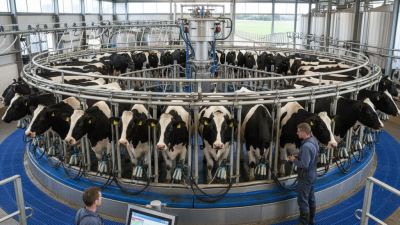
Rotary parlours move cows on a circular platform while workers remain in one fixed area. They suit larger herds, but installation requires careful structural planning. Chinese factories also make pipeline systems, vacuum pumps, milk meters, pulsators, teat-cleaning units, and automatic cluster removers. Some suppliers provide stainless steel receiving jars, washable hoses, cooling tanks, and control cabinets as complete packages. In practice, inspect stainless steel quality, vacuum stability, pulsation accuracy, drainage, and spare-part access. Ask for test records and service details. Do not rely on polished photos. A low price can hide difficult cleaning or delayed maintenance. Field experience often shows that specifications look complete while cable routing and operator comfort remain poorly explained. That gap deserves careful questioning before installation.
Best China Milking Parlour Equipment Manufacturers? - Types of Milking Parlour Equipment Made in China
| Equipment Type | Typical Parlour Size | Typical Throughput | Recommended Herd Size | Main Advantages | Common Construction Materials | Typical Automation Options | Best-Fit Farm Application |
|---|---|---|---|---|---|---|---|
| Herringbone Milking Parlour | 2 × 4 to 2 × 24 stalls | Approximately 50–120 cows/hour | Small to medium dairy farms | Cows stand at an angle, allowing good udder access and efficient operator movement. The layout is relatively economical and easy to supervise. | 304 stainless steel platforms and milk-contact parts; galvanized or coated structural steel for supporting frames | Milk meters, automatic cluster removers, pulsation control, identification readers and basic herd-management integration | Farms requiring a practical, cost-effective parlour with flexible stall numbers |
| Parallel Milking Parlour | 2 × 4 to 2 × 2 × 24 stalls | Approximately 60–150 cows/hour | Medium to large dairy farms | Cows stand side by side at about 90 degrees to the operator pit, creating a compact footprint and supporting fast attachment of milking clusters. | 304 stainless steel cow platforms, stainless steel pit railings and corrosion-resistant steel gates | Automatic cluster removal, milk conductivity monitoring, electronic milk meters, cow identification and feeding controls | Commercial dairies that need high stall density and efficient use of building space |
| Rotary Milking Parlour | 20 to 80 platforms | Approximately 100–400 cows/hour | Large-scale and high-throughput dairies | A slowly rotating platform brings cows continuously to the operator. It provides a steady workflow and can reduce idle time between groups. | 304 stainless steel or coated steel platform components; food-grade elastomers and stainless steel milk lines | Automatic cow identification, individual yield recording, automatic detachers, electronic sorting gates and real-time health alerts | Large herds with regular milking routines and sufficient capital and technical support |
| Swing-Over Milking System | 2 × 4 to 2 × 16 stalls | Approximately 40–100 cows/hour | Small to medium dairy farms | One milking cluster can serve cows on both sides of the pit, reducing equipment cost and simplifying the milking line. | Stainless steel swing arms, food-grade rubber liners, stainless steel claw pieces and sanitary milk tubing | Electronic milk meters, automatic cluster removal, programmable pulsators and vacuum monitoring | Farms seeking a lower-equipment-cost solution without installing a separate cluster for every stall |
| Side-by-Side Milking Parlour | 2 × 4 to 2 × 2 × 24 stalls | Approximately 70–160 cows/hour | Medium to large dairy farms | Parallel positioning and rear cow access can support rapid loading and unloading, especially when an efficient exit gate is installed. | 304 stainless steel stall dividers, galvanized structural frames and sanitary stainless steel milk-contact components | Exit gates, cow ID systems, milk yield monitoring, automatic detachers and selective sorting | High-throughput farms that prioritize fast cow movement and compact stall arrangement |
| Tandem Milking Parlour | 2 to 6 cows per side | Approximately 25–70 cows/hour | Small herds and specialty dairy operations | Cows enter and leave individually, allowing the operator to work with each animal without stopping the entire side of the parlour. | Stainless steel cow gates, corrosion-resistant frames, food-grade liners and sanitary milk hoses | Individual milk meters, automatic detachers, cow identification and programmable feeding stations | Small farms, educational dairies and operations requiring individual cow handling |
| Milking Cluster and Claw Assembly | One assembly per milking unit | Designed for stable vacuum and balanced milk flow | All parlour configurations | Connects the teat cups, short milk tubes and long milk tube while maintaining a balanced milking routine. | Food-grade silicone or rubber liners, stainless steel claw pieces and transparent sanitary tubing | Automatic shut-off valves, milk-flow sensors, conductivity sensors and electronic detachment | Replacement, upgrading or standardization of milking units across a dairy facility |
| Milk Pipeline and Receiver Group | Configured according to parlour length and number of units | Commonly supports 4–48 milking units | Small to large dairy farms | Transfers milk from the clusters to the receiver jar and cooling system while helping maintain hygienic milk handling. | 304 stainless steel sanitary pipes, stainless steel receiver jars, food-grade gaskets and hygienic valves | Air injection, automatic washing circuits, milk-flow measurement, air admission control and pipeline temperature monitoring | Parlours requiring a centralized and clean milk-transfer route |
| Vacuum Pump and Regulation System | Selected according to the number of milking units | Common operating vacuum range: approximately 40–50 kPa | All mechanical and automated parlours | Provides stable vacuum for milk extraction and helps reduce fluctuations that may affect milking consistency. | Cast iron or stainless steel pump housing, corrosion-resistant regulators and food-safe vacuum tubing | Variable-speed drive, electronic vacuum regulation, vacuum alarms and digital performance monitoring | New installations and upgrades requiring reliable vacuum stability |
| Cleaning-in-Place System | Designed for the complete milk-contact circuit | Typically uses programmed rinse, alkaline wash, acid wash and final rinse cycles | All dairy parlour sizes | Automates cleaning of pipelines, receiver jars, claws and other milk-contact components after milking. | 304 stainless steel wash tanks, sanitary valves, food-grade hoses and heat-resistant seals | Programmable temperature control, chemical dosing, conductivity monitoring, cycle logging and wash alarms | Farms focused on milk hygiene, repeatable sanitation and labor reduction |
| Automatic Feeding and Cow Identification System | Integrated with stall gates or feed stations | Processes animals individually during entry, milking or exit | Medium to large farms and data-managed dairies | Links cow identity with milk yield, feeding records and selected management events. | Stainless steel feed troughs, coated steel frames, weather-resistant sensors and food-grade contact surfaces | RFID identification, ration control, yield-based feeding, sorting gates and herd-management software connectivity | Dairies seeking improved traceability, targeted feeding and data-based herd management |
| Automatic Cluster Removal System | One control unit for each milking unit or stall group | Detaches clusters when milk flow falls below a preset level | Medium to large farms and labor-efficient parlours | Helps limit over-milking, standardizes cluster removal and reduces the need for manual monitoring. | Stainless steel components, food-grade tubing, electronic sensors and washable control housings | Milk-flow thresholds, delayed take-off, vacuum shut-off, stall identification and alarm reporting | Operations aiming to improve milking consistency and reduce operator workload |
Typical capacities and dimensions vary according to the number of milking units, operator routine, cow flow, vacuum configuration, milking duration and level of automation. Final equipment selection should be based on herd size, building layout, local electrical standards, sanitation requirements and after-sales service capability.
Related Posts
-
What Are the Top 10 Types of Dairy Barn Equipment?
-

Top 10 Milking Parlour Equipment Suppliers Worldwide?
-
Why Choose the Right Milking Parlour Equipment?
-
2025 Top Milking Equipment Innovations for Modern Dairy Farming
-

Top 10 Essential Milking Parlour Equipment for Optimal Dairy Farm Efficiency
-
How to Choose the Right Milking Parlour Equipment for Your Dairy Farm?