Best Dairy Products Manufacturers in China for Global Buyers
Global buyers looking for the best dairy products manufacturers in China need more than a polished catalogue. They need suppliers who can demonstrate consistent quality, clear product specifications, reliable cold-chain handling, and responsive communication. The right partner may offer milk powder, cheese, butter, or other dairy products dairy products, but product fit matters as much as factory scale. A sample carton should arrive at the agreed temperature. A specification sheet should match the product inside.
Dairy scientist John A. Lucey’s research highlights how milk composition and processing influence dairy quality. In paraphrase: “Good dairy quality depends on both the milk and how it is processed.” Buyers can use this principle when comparing manufacturers, asking about raw-milk testing, processing controls, traceability, and batch records. Details count. A capable supplier should answer these questions with evidence, not just confident claims. This guide introduces practical criteria for assessing Chinese manufacturers, including product range, quality systems, production capacity, and export experience. It is not a guarantee that every listed company will suit every buyer. Even a strong supplier may have limits in customization, lead time, or destination-market documentation. Check those details directly, request current records, and evaluate samples before making a decision. Small inconsistencies can matter.
China’s Dairy Manufacturing Industry: Scale, Regions, and Key Trends
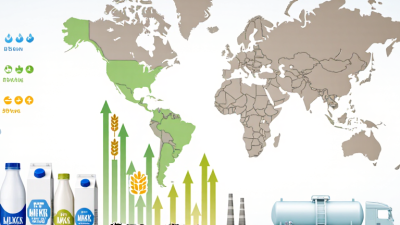
China’s dairy industry is large, but its output is not spread evenly. National Bureau of Statistics data put 2024 milk production at about 40.8 million tonnes, down from 42.0 million tonnes in 2023. The USDA Foreign Agricultural Service’s 2024 Dairy and Products Annual also tracks China’s production and trade, underscoring how domestic supply interacts with imports. Scale is significant. Yet scale alone can mislead: farm size, milk quality, and processing capacity vary.
Production is concentrated in northern regions, including Inner Mongolia, Heilongjiang, and Hebei, where colder climates and established farming infrastructure support large herds. Further south, processors often rely more on milk transported from production areas, making cold-chain handling important. Current pressures include uneven demand, excess supply in some periods, and the need to improve efficiency. These trends are not identical across every province.
Tips: Ask suppliers which farm regions supply their plants, and request recent quality-test records. For chilled products, check collection-to-processing times and temperature controls. A neat factory tour is useful, but it cannot replace traceable batch documents. That distinction is easy to miss.
Main Dairy Product Categories and Manufacturing Capabilities
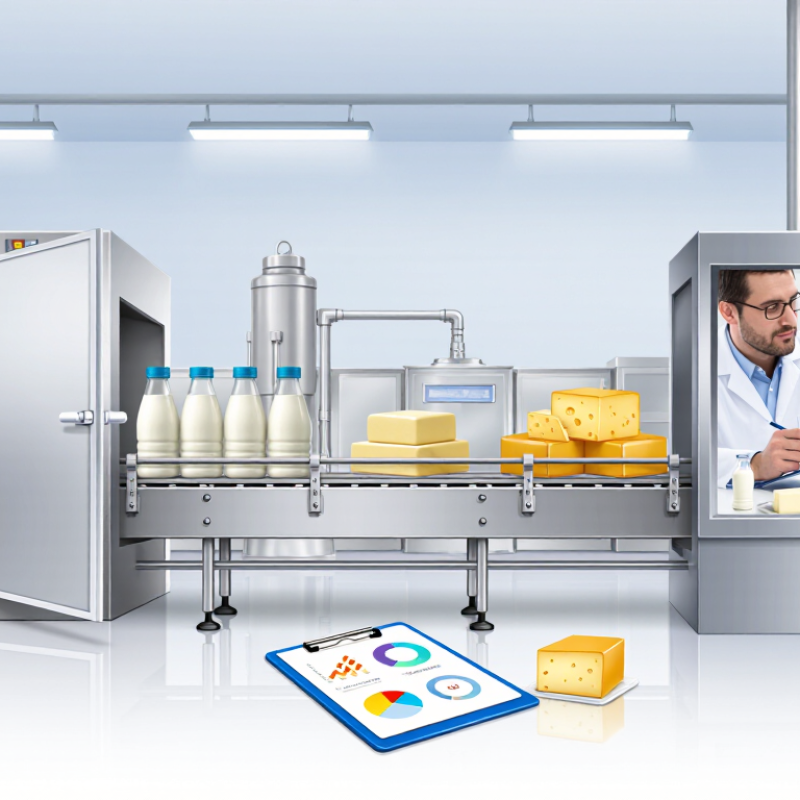
Chinese dairy manufacturers serve global buyers with products ranging from UHT milk and yogurt to cheese, butter, cream, and milk powder. Some plants also process whey, lactose, or specialized milk proteins. Capabilities vary widely. One facility may focus on aseptic cartons, while another is set up for spray-dried powder or cultured products. Buyers should confirm which processes take place on-site and which are outsourced.
Tips: Request product specifications, ingredient lists, packaging options, and recent test reports for the exact item under discussion. For chilled products, check how temperature is monitored during storage and shipping. Details matter.
Manufacturing equipment alone does not establish consistent quality. Ask how suppliers control incoming milk, pasteurization, fermentation, drying, and batch records. A polished catalog can hide limits in production capacity or export experience, so verify claims with facility records or an independent audit where practical. Samples can reveal texture and flavor, but they do not replace checks on shelf life, packaging integrity, and batch-to-batch variation. These checks take time, and not every buyer will have the resources to inspect every step; documenting open questions helps avoid assumptions.
Leading Chinese Dairy Manufacturers for International Buyers
Leading Chinese Dairy Manufacturers for International Buyers
Chinese dairy manufacturers offer a broad mix of products, including milk powder, UHT milk, cheese, and whey ingredients. Export capabilities vary by factory, so buyers should assess each supplier’s product range and production controls. Ask for recent product specifications, allergen details, batch test reports, and storage requirements. A clear answer matters. During a factory review, check how raw milk is received, how temperature is monitored, and how batches are traced. These details can reveal more than a polished catalogue. Samples also help assess flavor, solubility, and performance in your own recipes.
Tips: Match the manufacturer’s documents to the destination market and intended use. Confirm packaging sizes, shelf life, minimum order quantities, and cold-chain needs before negotiating. Request a sample from a production batch, where possible. Keep written records of agreed specifications. Small gaps in communication can become costly later.
Not every supplier will suit every buyer. Some may have strong capacity but limited experience with a particular export market; others may need time to adjust packaging or documentation. Verify certifications directly with the issuing body, and discuss audit access early. A careful comparison takes effort, and no checklist removes all uncertainty.
Quality Standards, Certifications, and Export Readiness
For global buyers, a dairy manufacturer’s quality system matters as much as its product range. Ask whether food-safety certificates are current and cover the actual factory and product category. Schemes such as HACCP-based systems, ISO 22000, or FSSC 22000 can support supplier assessment, but their scope and validity need checking. A certificate alone is not a guarantee. Details matter.
Review product specifications for protein, fat, moisture, microbiological criteria, and shelf life. Request a recent certificate of analysis linked to a specific production lot, not a generic sample. Check whether ingredient statements, allergen controls, and packaging formats match your market and production line. Small discrepancies can cause real delays. They are easy to miss.
Export readiness also depends on traceability and shipment controls. Ask how quickly the factory can trace a lot from raw milk intake to finished cartons, and whether it tests its recall process. For chilled products, examine temperature records, loading procedures, and seal checks. Confirm required health documents and labeling rules with qualified local authorities, since requirements vary by destination. A supplier may appear ready on paper, yet struggle with a sudden specification change. That deserves an honest conversation before orders begin.
Best Dairy Products Manufacturers in China for Global Buyers — Quality Standards, Certifications, and Export Readiness
China’s GB 19301-2010 standard sets minimum fat and protein levels for raw cow’s milk. These composition benchmarks are one quality reference for buyers; they do not replace checks of a supplier’s certifications or the destination market’s import requirements.
Source: China National Food Safety Standard GB 19301-2010, Raw Milk. Values shown are minimum thresholds in grams per 100 grams.
How Global Buyers Can Evaluate and Select a Supplier
A supplier’s catalogue is only a starting point. Ask for product specifications, recent test results, and a traceability example linking a finished lot to its raw-milk intake. Check whether the plant can consistently meet your required fat, protein, moisture, and microbiological limits. Verify the basics. Request an audit summary, corrective-action records, and evidence that temperature controls are monitored during storage and shipment. A polished certificate alone does not show how a factory handles a production deviation.
Capacity matters. The Food and Agriculture Organization’s Dairy Market Review 2024 estimated global milk production at about 965 million tonnes in 2023, underscoring the scale and complexity of dairy supply chains. China’s National Bureau of Statistics reported 41.97 million tonnes of milk production that year. These figures provide context, not proof that any individual supplier can serve your market. Compare trial batches with agreed specifications, then review packaging integrity, shelf-life data, and shipment records. Ask how the supplier manages seasonal variation and ingredient substitutions. I would not rely on one successful sample; results can differ between batches. Confirm that export documents, labels, and product claims match your destination-market requirements, and have qualified local specialists check them before placing a large order.